Heat-Reflective, UV-Resistant Deck Railing Options for Henderson’s 110-Degree Summers
If your deck railing wobbles when you lean on it, or the top rail gets too hot to touch by June, you are dealing with two separate problems that usually show up together on older Henderson decks. Sun damage loosens fasteners, dries out wood, and fades finishes, and the same heat makes the railing itself unusable half the year. The fix is to think about heat reflective, UV resistant materials from the start, not as an upgrade later. This list walks through seven heat reflective deck railing choices and decisions that matter in the Mojave, so you can replace an unsafe railing once and not touch it again for a long time.
A quick note on safety first. If your railing moves more than a slight flex under hand pressure, or any baluster pulls free, treat the deck as a hazard now, especially around a hot tub where wet feet and raised platforms raise the stakes. Everything below assumes you are replacing, not patching, a railing that has failed.
1. Start With Light Colors: The Cheapest Heat-Reflective Deck Railing Choice You Can Make
Color does more work than material when it comes to surface temperature in direct desert sun. A light tan, sand, or white railing reflects a meaningful share of solar energy that a dark bronze or black railing absorbs and holds. On a west-facing Henderson deck in July, that difference is the gap between a top rail you can rest a hand on and one you avoid entirely.
This matters most on the cap rail, the horizontal surface people actually grab. Posts and balusters take sun too, but hands land on the top. If you love the look of dark metal, consider a two-tone design: dark posts and balusters with a lighter composite or PVC cap rail. You keep the modern look without the burn.
2. Powder-Coated Aluminum: The Desert Workhorse
Aluminum railing with a quality powder-coat finish is the most common recommendation for Henderson replacements, and for good reason. It will not rot, warp, crack, or feed termites, and modern powder coatings carry UV inhibitors that resist the chalking and fading that killed older painted metal railings. It is also light, which simplifies deck railing installation on existing framing because the posts carry less dead load.
The trade-off is heat. Aluminum conducts heat fast, so a dark aluminum top rail in afternoon sun gets hot enough to be uncomfortable. Choose a lighter coating color, or pair aluminum balusters with a composite cap rail. For a hot tub deck, aluminum is a strong pick because it shrugs off the constant humidity and splash that destroys wood railings within a few seasons.
3. Composite and PVC Railing Built for UV Resistance
Composite and PVC railing systems have improved sharply, and as of 2026 the better lines include capped surfaces with UV stabilizers baked into the outer shell. That cap layer is what separates a railing that holds its color for a decade from one that fades to gray in three summers. When you compare composite deck railing options, ask specifically about the fade warranty and whether the product was tested for high-UV climates, not just coastal moisture.
PVC runs cooler to the touch than most composites of the same color because it is less dense. However, both expand and contract with temperature swings, and Henderson sees big daily swings. A builder who knows the material will leave proper expansion gaps at rail ends; one who does not will hand you a heat reflective deck railing that bows or squeaks by August. This is a spot where installation skill matters as much as the product.
4. Why Heat-Reflective, UV-Resistant Finishes Matter More Here Than Almost Anywhere
Henderson sits in one of the highest solar-exposure regions in the country, and railings take sun from more angles than the deck surface itself. Vertical balusters catch low morning and evening sun that a horizontal deck board never sees. As a result, a finish that performs fine in Denver or Dallas can fail early here, fading unevenly on the south and west faces while the shaded side stays dark.
When you evaluate any railing product, look for three things: a UV-stabilized or co-extruded cap on composites, a powder coat rated for high-UV exposure on metals, and lighter pigments that are heat reflective and UV resistant by nature rather than by additive alone. Dark pigments absorb more energy, which accelerates the breakdown of the binders holding the finish together. Light colors fade slower for the same reason they stay cooler.
5. Cable Railing: Great Views, Honest Trade-Offs
Cable railing earns its popularity in backyards built around a pool or Strip view, because thin stainless cables disappear visually in a way balusters never will. The cables themselves handle sun fine. The frame is the question: a cable system is only as heat-smart as the posts and top rail that hold it, so the same color and material logic applies.
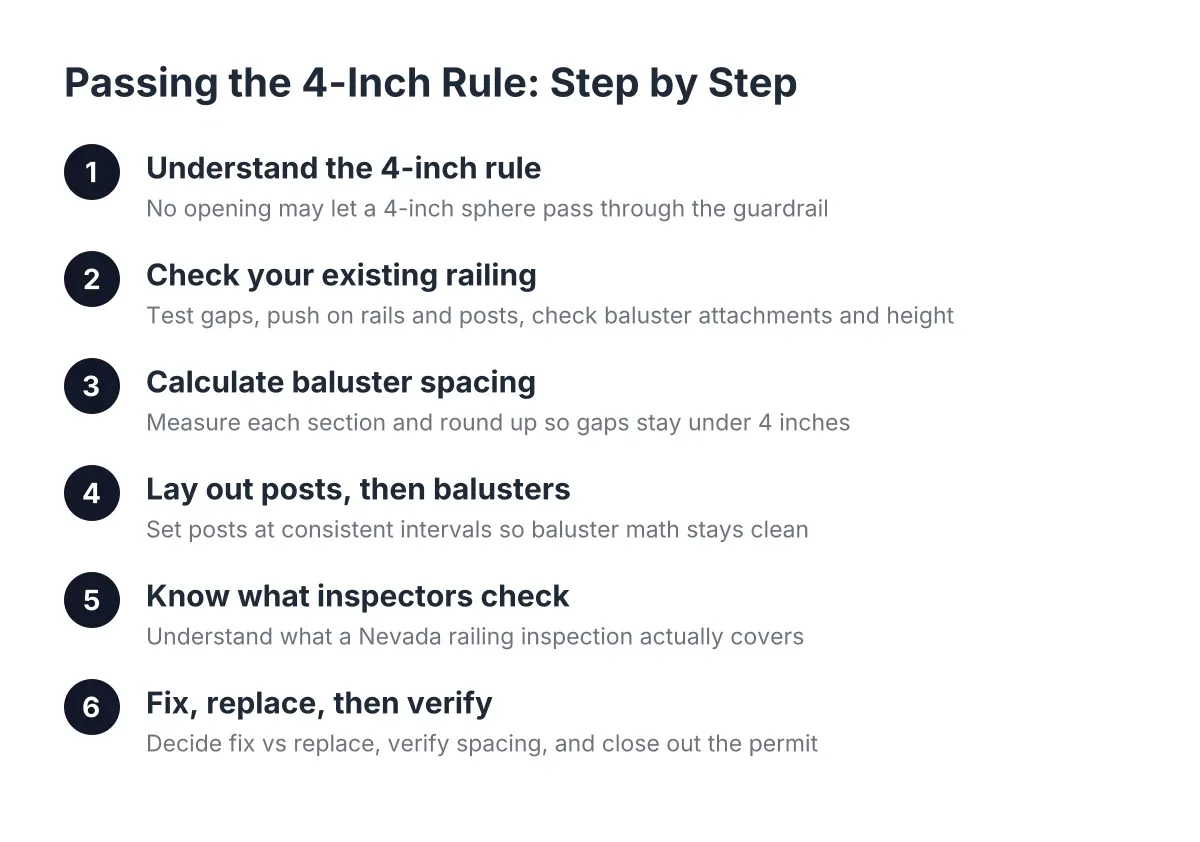
In the cable vs wood deck railing comparison, cable wins on maintenance and sightlines but costs more up front and needs periodic re-tensioning, since temperature swings work on the cables over time. Code also matters here. Horizontal cables must be tensioned and spaced so a sphere of the size the code specifies cannot pass through, and inspectors check this. Around a hot tub with kids in the household, some homeowners skip horizontal infill entirely because it reads as a ladder to a climbing five-year-old.
6. Pressure-Treated Wood: The Budget Option With a Desert Asterisk
Pressure treated wood deck railings remain the cheapest path to a code-compliant railing, and simple deck railing designs in treated lumber can look clean when they are built well. The treatment protects against rot and insects. It does nothing against UV. Desert sun pulls moisture out of the wood, opens checks and cracks, and loosens the fastener connections that keep a railing rigid.
Therefore, if you choose wood, commit to recoating with a UV-blocking, pigmented stain on a regular schedule, because clear sealers alone will not stop the graying and surface breakdown here. There is a resale argument for wood: according to Zonda and the National Association of the Remodeling Industry, a wood deck addition recoups 95% of its cost at resale, ahead of composite at 89%. That math favors wood on paper, but it assumes the wood still looks good when you sell, which in Henderson means you did the maintenance.
7. Deck Railing Posts and the Heat Reflective Structure Behind Them
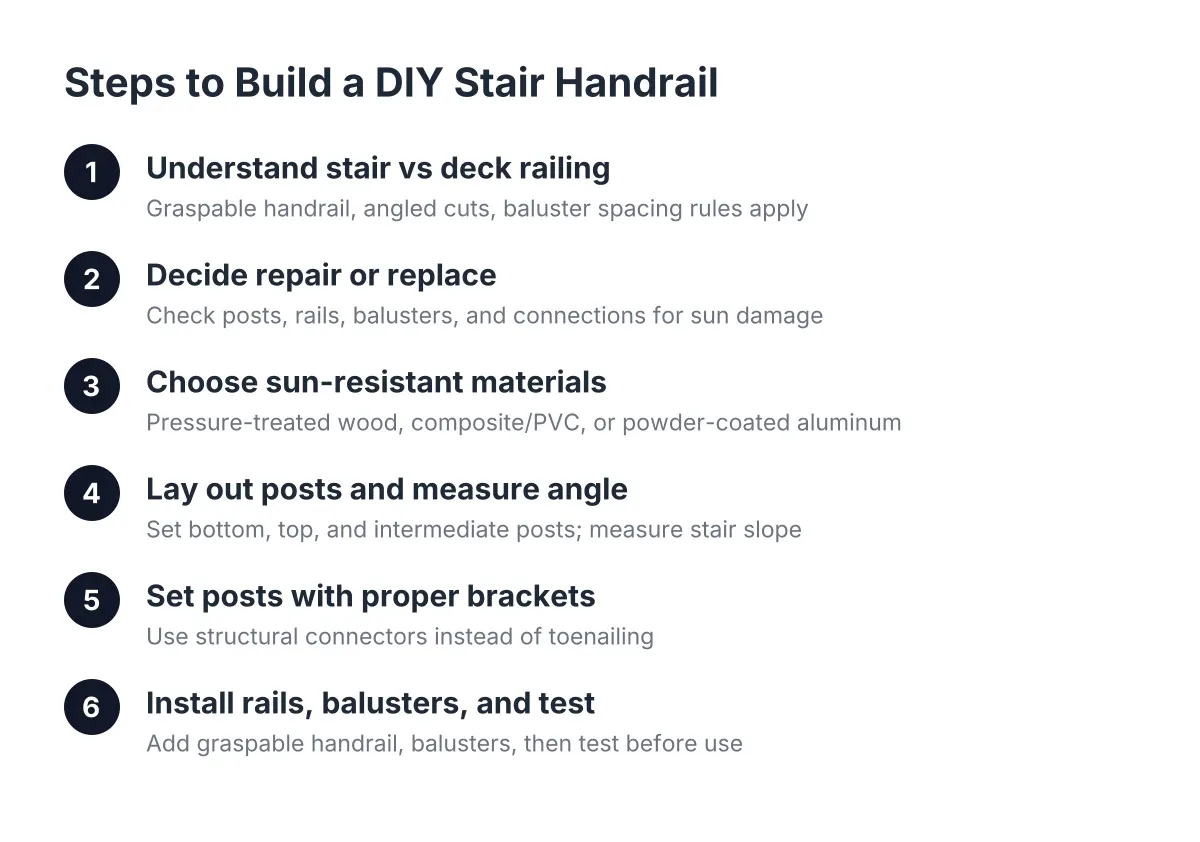
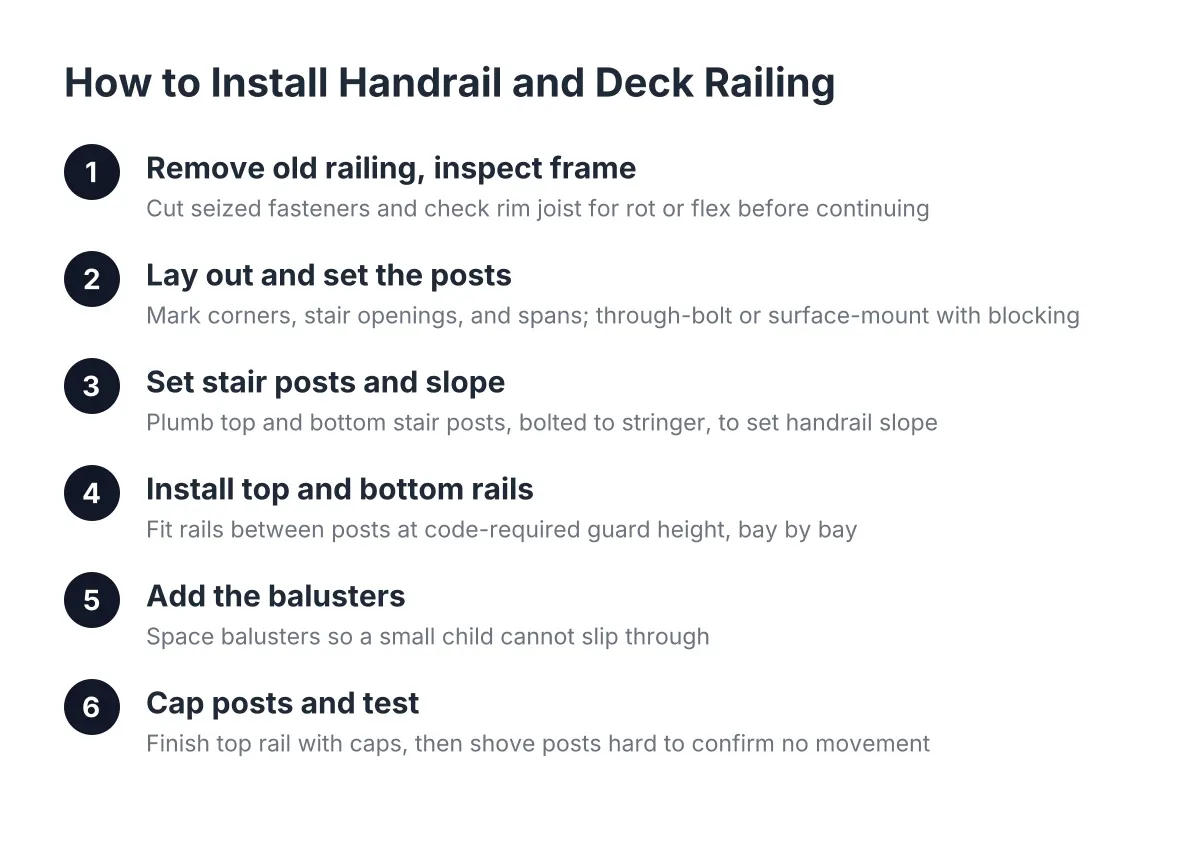
A railing is only as safe as the posts anchoring it, and this is where most wobbly railing complaints actually start. Deck railing posts must tie into the deck framing with through-bolts and blocking, not lag screws into a single rim joist that desert heat has dried and split. Fixing a wobbly deck railing by tightening surface screws is a patch; if the post base connection has failed, the railing fails with it.
For hot tub decks, this goes a step further. A spa platform carries a concentrated load of water, shell, and people, and the railing around it needs posts anchored to framing sized for that load. Suppose a homeowner in Green Valley buys a seven-person spa with a delivery date six weeks out, and the existing deck has a railing that shifts under hand pressure. In that scenario, the right move is usually to reinforce or rebuild the platform framing and set new posts as part of the same project, rather than bolting a new railing to framing that was never rated for the spa. One structural plan, one permit path, one inspection.
8. What Replacement Actually Costs, and What Drives the Number
Deck railing replacement cost comes down to a handful of drivers, and knowing them helps you compare bids honestly:
- Material tier. Treated wood sits at the bottom, aluminum and standard composite in the middle, and cable or custom metal at the top.
- Linear footage and corners. Every corner and stair run adds posts, brackets, and labor.
- Post condition. If existing deck railing posts and framing connections are sound, you pay for railing; if they are not, you pay for structural work first.
- Permits and HOA review. Clark County and the City of Henderson have their own permit paths, and master-planned communities often add a design review step for visible changes like railing style and color.
- Access and height. Second-story and multi-level decks cost more per foot than a ground-level patio deck.
As a rough illustrative range, straightforward wood replacement on an accessible single-level deck might run a few thousand dollars, while a full aluminum or cable system on a large elevated deck can reach five figures. Treat any quote that skips a look at your post connections with suspicion. A deck builder who specializes in this work will check the framing before pricing the railing, because that is where the real scope hides.
How Henderson Codes Shape Your Railing Choice
Nevada follows model building codes that set the baseline most homeowners search for under deck railing codes Nevada: guards are required once a deck surface sits a certain height above grade, with minimum guard height, maximum opening sizes between balusters, and load requirements the assembly must resist. Your city or county permit office confirms the exact local amendments, so verify current requirements before you build.
None of those code rules mention heat or fade, which is exactly why this article exists. Code tells you the railing must be safe on day one. The desert decides whether it is still safe, and still worth looking at, in year ten. A heat reflective deck railing with UV resistant finishes is not a code item; it is the difference between a railing that meets code once and one that keeps meeting it.
One honest limitation: no material choice substitutes for a structural evaluation on an older deck. If your deck predates the current owner, carries a hot tub, or shows any movement at the posts, have a qualified deck builder or structural professional assess the framing before you spend a dollar on new railing. The prettiest UV-stable cap rail in the Valley will not hold a fall if the post beneath it is bolted to cracked lumber.
The Short Version
For most Henderson replacements, the decision tree is simple. If budget leads, choose treated wood in a light stain and accept the maintenance schedule. If low maintenance leads, choose powder-coated aluminum or capped composite in a light color. Additionally, if views lead, choose cable with a composite top rail. Across all of them, light colors, UV-rated finishes, and solid post connections do more for long-term safety and comfort than any single brand name, and a local deck builder who works in this climate every week will steer you the same way.
If you need deck construction, Henderson Deck Co can help.
Prefer to talk it through? Call (725) 425-5179 — a quick call is usually the fastest way to get a straight answer for your situation.