Wood vs. Composite vs. Metal Deck Railing: What Holds Up in Henderson Heat
If you own an older deck in Henderson, the railing is usually the first thing to fail. A wood deck railing that went up ten or fifteen years ago has been baking in Mojave sun ever since, and by now the posts may wobble, the balusters may be loose, and the top rail may be splintering. This guide walks you through replacing it step by step, with a straight comparison of wood, composite, and metal deck railing so you pick a material that survives desert heat instead of fighting it.
The stakes are higher than looks. A railing is a safety system, and if you are planning a hot tub deck, people will be leaning on that rail with wet hands and bare feet year-round. Here is how to get the replacement right.
Step 1: Test Whether Your Current Deck Railing Is Safe
Before you shop materials, find out how bad the existing railing is. Grab the top rail at each post and push outward with steady body weight. Any movement at the post base is a structural problem, not a cosmetic one. A rail that flexes an inch under a firm push will not stop a person falling against it.
Next, check these specific failure points:
- Post bases where the railing bolts to the deck frame. Look for rusted lag screws, cracked wood, or posts notched around the rim joist. Notched posts are a common weak point on older builds.
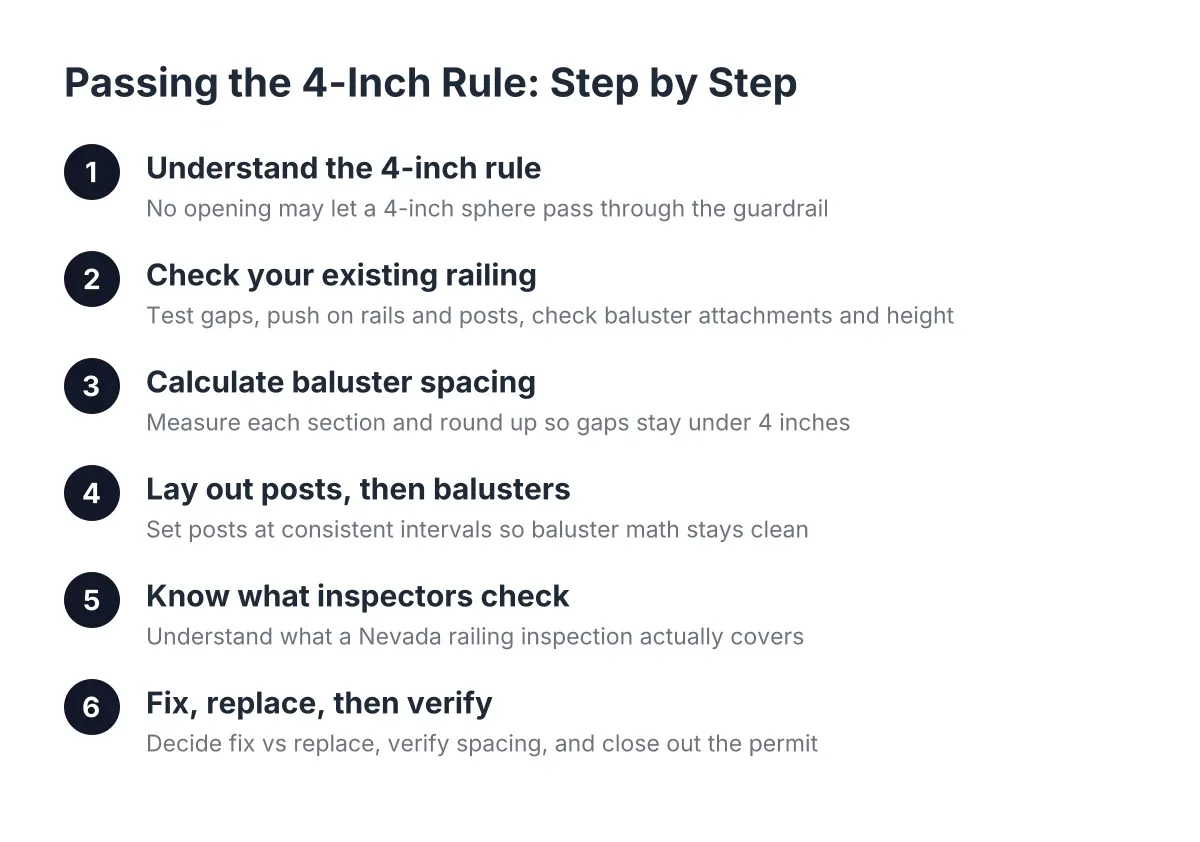
- Baluster spacing. Modern residential code generally requires gaps small enough that a small sphere cannot pass through, which protects kids and pets. Many older decks have wider gaps that no longer meet code.
- Rail height. Older railings are often shorter than what current code calls for on decks above a certain height off grade.
- Sun damage. Gray, checked, or splintering wood on the top rail means UV has broken down the surface fibers. Paint or stain peeling on the south and west faces first is the classic Henderson pattern.
However, a wobbly railing does not always mean the whole deck is failing. Sometimes the frame underneath is sound and only the railing needs replacement. If posts move because the rim joist itself is soft or the framing connections have loosened, stop and have a deck builder inspect the structure before spending money on new rails.
Step 2: Comparing Wood, Composite, and Metal Options for Your Deck Railing
Material choice matters more in Henderson than in most markets. Surfaces here get hot enough to burn bare skin in summer, and UV exposure fades and degrades materials faster than in milder climates. Each option trades cost against maintenance and heat behavior differently.
Where a Wood Deck Railing Still Makes Sense
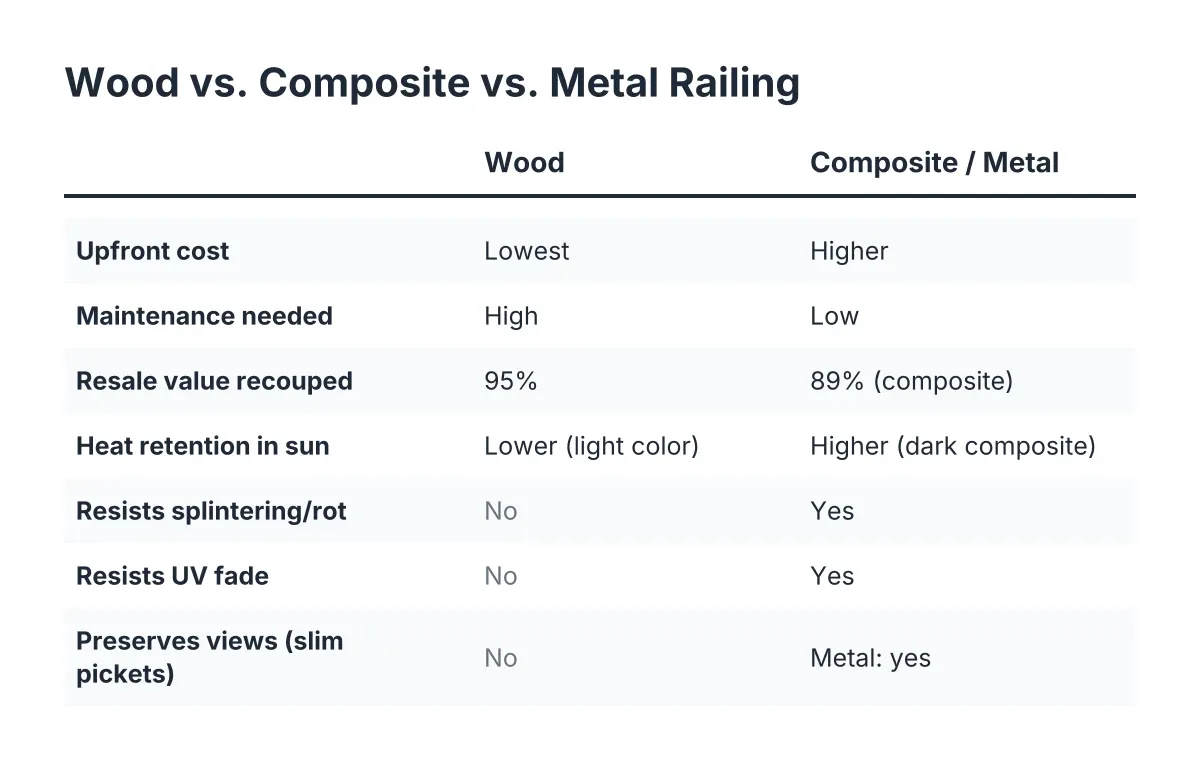
Wood is the lowest upfront cost and the easiest to customize, which is why wood deck railing designs still dominate search results and big-box aisles. Wood also has resale appeal; according to Zonda and the National Association of the Remodeling Industry, a wood deck addition recoups 95% of its cost at resale in the 2025 Cost vs. Value Report, compared to 89% for composite.
The catch is maintenance. In the desert, an unsealed wood rail checks, splinters, and grays fast because the top rail takes direct sun all day at a flat angle. Plan on re-staining or re-sealing on a regular cycle, and expect the horizontal top rail to wear before anything else. If you like the look and accept the upkeep, choose a species and finish suited to high-UV climates and keep a lighter color; dark stains absorb more heat and become uncomfortable to touch.
Composite Railing: Low Maintenance With Heat Trade-offs
Composite railing skips the staining cycle, resists splintering, and holds color far better than paint on wood. For a homeowner in a new-build community like Cadence or Inspirada who wants to finish the backyard once and not think about it again, composite is often the practical pick. It also pairs cleanly with composite decking if you are building the whole deck at the same time.
The trade-off is heat retention. Dark composite rails get hot in direct sun, hotter than light-colored wood. Manufacturers now offer heat-reflective, lighter colorways, and those are worth prioritizing here. Composite also costs more upfront than wood, and cheap early-generation composite faded badly in desert UV, so quality of the specific product line matters.
Metal Deck Railing: The Desert Workhorse
Powder-coated aluminum is the material most Henderson deck builders reach for when a client says "I never want to touch this again." A metal deck railing does not rot, warp, splinter, or feed termites, and quality powder coating resists UV fade far better than paint on wood. The slim pickets also preserve views, which matters if your lot backs to open desert or a golf course.
Steel and cable railing systems look sharp but bring their own issues. Cable needs periodic re-tensioning, and any uncoated steel component will show rust where sprinkler overspray or pool splash hits it. Aluminum avoids both problems. Expect metal to cost more than wood upfront, in the same general range as good composite, with the lowest maintenance of the three.
Step 3: Get the Code and Permit Questions Answered First
Railing replacement is where older Henderson decks most often collide with current code. Rules on rail height, baluster spacing, and the load a railing must resist have tightened over the years, and a like-for-like copy of your 1998 railing may not be legal to install in 2026.
Therefore, before ordering material, confirm three things:
- Whether your project needs a permit through the City of Henderson or Clark County, depending on where the property sits. Full railing replacement on an elevated deck often does; a builder who works here regularly will know the local path.
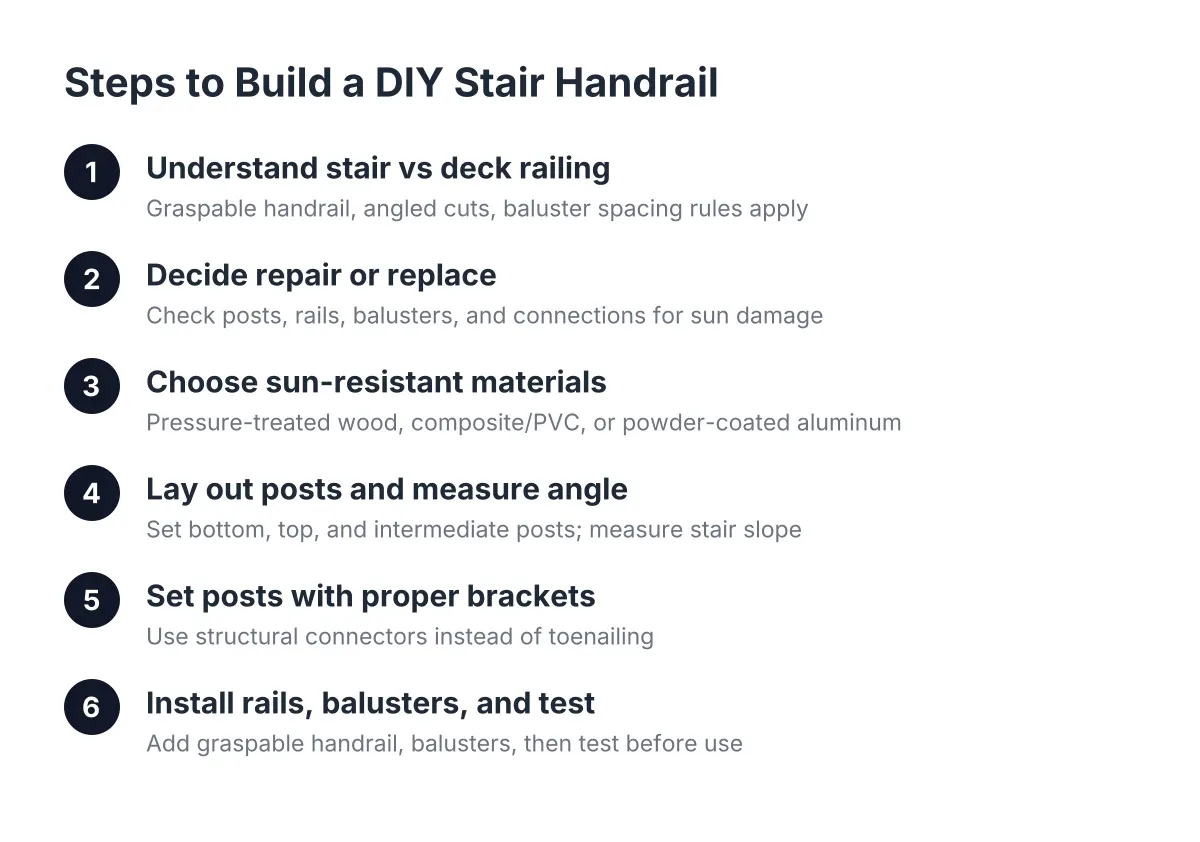
- What current code requires for height, opening size, and graspable stair railing where the deck has steps.
- Whether your HOA requires design review. Master-planned communities in the valley commonly restrict railing color, style, and visibility from the street, and approval takes time you should build into the schedule.
Do not skip this step to save a few weeks. An unpermitted railing can surface at resale inspection, and redoing it costs more than doing it right once.
Step 4: Plan the Structure, Especially if a Hot Tub Is Involved
Railing posts are only as strong as what they attach to. On a standard replacement, that means solid rim joists and proper hardware, not just lag screws into end grain. On a hot tub deck, it means more.
A filled spa concentrates thousands of pounds on a small footprint, and the railing around it takes constant leaning from people getting in and out. If you are adding a hot tub, the deck frame usually needs reinforcement first: closer joist spacing, added beams, and footings sized for desert soil, where caliche layers can complicate digging and change how footings get set. Say a homeowner in Cadence buys a spa and wants it on an existing builder-grade deck; in that scenario, a competent deck builder would check the framing and footings before quoting any railing at all, because a beautiful new rail on an under-built frame solves nothing. This is also the moment to plan electrical routing and service access, since retrofitting either after the railing goes in means tearing work out.
This is the clearest call-a-pro line in the whole project. Swapping balusters on a sound frame is a reasonable weekend job for a handy homeowner. Structural post attachment, stair railing installation, and anything supporting a spa deck belong with a professional, because the failure mode is someone falling.
Step 5: Hire the Installer and Set Cost Expectations
For deck railing installation, scope of work from a good provider should include removing and hauling off the old railing, inspecting and repairing the attachment points, installing new posts with rated hardware, setting rails and infill to code spacing, and handling deck railing for stairs including graspable handrail where required. Permit coordination and HOA submittal help are often included by local specialists; complex framing repair discovered during demo is usually extra, and a fair contract says so upfront.
On cost, wood runs cheapest per linear foot, composite and aluminum cost more upfront but far less over time in maintenance, and cable systems typically sit at the top. Exact wood deck railing cost per linear foot depends on species, design, and how much post and frame repair the job needs, so treat any figure quoted without a site visit as a guess. Most straightforward railing replacements take days, not weeks, once permits and HOA approval are in hand; the paperwork is often the longest part of the timeline.
When comparing quotes, ask three questions:
- How will you attach the posts, and what hardware will you use? A vague answer here predicts a wobbly railing later.
- What does this material look like after five Henderson summers? A local specialist can describe fade and heat behavior from jobs they have serviced.
- Does your quote include permit and HOA handling, or is that on me?
A fair quote itemizes demo, materials, labor, and permits separately, so you can see what you are paying for and compare bids honestly.
The Bottom Line for Henderson Railings
For most older decks here, aluminum or a heat-reflective composite railing beats wood on total cost of ownership, while a well-maintained wood deck railing wins on upfront price and resale familiarity. Whatever you choose, fix the structure first, meet current code, and plan for the sun, because the desert does not forgive shortcuts.
If your railing wobbles, your deck is bare, or a hot tub is on the way, talk to a Henderson deck specialist about an on-site estimate. A short walkthrough will tell you whether you need a railing swap, frame reinforcement, or a full rebuild, and you will get real numbers instead of guesses.
If you need deck construction, Henderson Deck Co can help.
Prefer to talk it through? Call (725) 425-5179 — a quick call is usually the fastest way to get a straight answer for your situation.