New Construction Backyard Decks Terms Explained: A Plain-English Glossary
If you are getting quotes for a new deck in Henderson, the paperwork comes loaded with words nobody explains. This new construction backyard decks glossary breaks down the terms a deck builder will use so you can read a quote line by line, ask better questions, and spot a thin bid before you sign it. Every entry starts with a plain definition, then tells you why the term matters for your money or your backyard. No sales talk, just the vocabulary.
- Footing: the concrete anchor under each post
- Caliche: the hard desert soil layer that fights digging
- Ledger Board: where the deck attaches to your house
- Freestanding Deck: a deck that stands on its own posts
- Joist: the boards that hold up the deck surface
- Composite Decking: wood-plastic boards that skip the staining
- PVC Decking: all-plastic boards built for heat and sun
- Heat-Reflective Decking: boards made to stay cooler underfoot
- UV Fade: sun damage that dulls deck color over time
- Deck Railing: the safety barrier around raised decks
- Patio Cover: a roof structure for shade over your deck or patio
- Multi-Level Deck: a deck built in connected tiers
- Hot Tub Deck: a deck framed to carry a spa's weight
- Building Permit: the city's sign-off before construction starts
- HOA Design Review: your community's approval step for exterior changes
- Setback: the required distance from your property line
- Load Rating: how much weight a deck is built to hold
- Resurfacing: new deck boards on an existing frame
Structural Framing Terms for New Construction Backyard Decks
These are the bones of the project, the parts you will never see once the deck boards go down. A new construction backyard decks glossary has to start here, because framing and footings are where good builders earn their money and bad bids cut corners.
Footing
A footing is the concrete base poured below ground that anchors each support post of your deck. Footings carry the entire weight of the structure down into stable soil, so their depth and size depend on what your deck will hold. In the Las Vegas Valley, digging footings often means dealing with hard desert ground, which affects labor time. If a quote does not mention footings at all, ask how the builder plans to support the deck.
Caliche
Caliche is a cement-like layer of hardened soil common in desert ground across the Las Vegas Valley. It can be hard enough to stop a standard auger, which means footing holes sometimes need heavier equipment or extra labor to dig. Builders who work in Henderson plan for it; builders who do not can hit it mid-job and come back asking for more money. Asking "how do you handle caliche?" is a fast way to test whether a contractor digs footings here often.
Ledger Board
A ledger board is the horizontal board bolted to your house that supports one side of an attached deck. It is one of the most failure-prone connections on any deck, because a poorly flashed or poorly bolted ledger can pull away from the home. A careful builder will talk about how the ledger attaches to your home's framing and how water is kept out of the connection. If your home's exterior makes a ledger risky, the builder may suggest a freestanding design instead.
Freestanding Deck
A freestanding deck is a deck supported entirely by its own posts and footings, with no structural connection to the house. Builders choose this design when attaching a ledger board is impractical, or when the deck sits away from the home, like around a pool or spa. Freestanding decks need more footings, which adds digging and concrete, so expect that reflected in the quote. The upside is that the deck does not depend on your home's wall for support.
Joist
A joist is one of the repeated horizontal boards that form the frame directly under your deck surface. Joist spacing matters because different decking materials need different support; some composite and PVC boards require closer spacing than wood. If a builder quotes a material switch without mentioning joist spacing, ask about it. Tighter spacing means more lumber and labor, and that is a legitimate cost driver, not padding.
Materials and Desert Durability
Material choice is where Mojave conditions change the conversation. Sun exposure and surface heat matter more here than in most of the country, and they should shape what goes on top of your frame.
Composite Decking
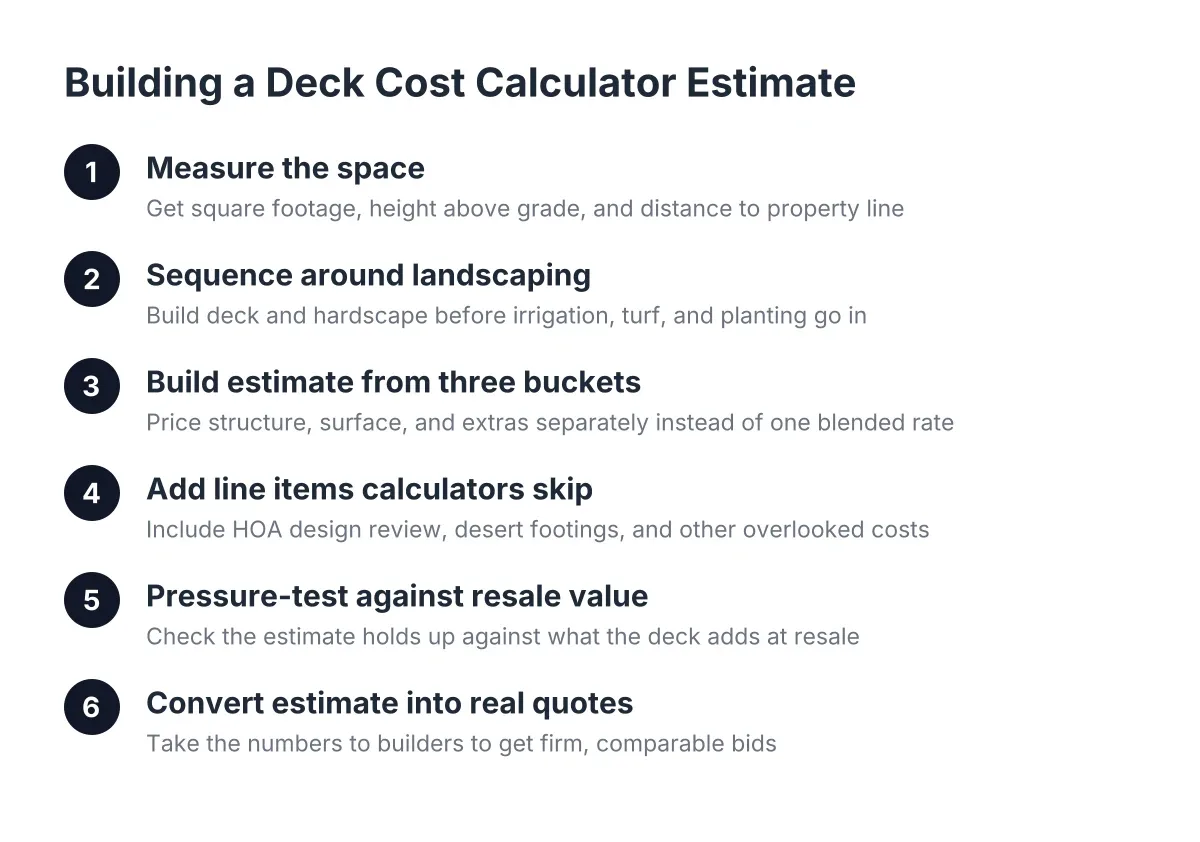
Composite decking is a board made from a blend of wood fibers and plastic, designed to resist rot, splintering, and the upkeep cycle of staining and sealing. For Henderson backyards, the draw is low maintenance under punishing sun. The tradeoff is upfront cost, which runs higher than basic wood, and surface heat, since some composites get hot in full sun. Color and quality tier drive the price range, which is why two composite quotes can look far apart. For a fuller breakdown of what moves the number, see how much new construction backyard decks cost.
PVC Decking
PVC decking is a deck board made entirely of plastic, with no wood content to absorb moisture or feed rot. It handles sun and dry heat well, holds color longer than many materials, and never needs stain. It usually costs more than composite, and it can feel different underfoot, so it is worth standing on a sample before you commit. A builder who offers both composite and PVC, and explains the tradeoffs plainly, is thinking about your yard rather than their inventory.
Heat-Reflective Decking
Heat-reflective decking means boards engineered or colored to absorb less heat from direct sun, so the surface stays cooler on bare feet. In a desert backyard this is not a luxury feature; a dark board in full afternoon sun can be too hot to walk on. Lighter colors and heat-managing formulas help, as does shade from a patio cover. If your deck faces west or wraps a pool, raise this topic early, because it narrows the material list fast.
UV Fade
UV fade is the gradual loss of color in decking, railing, and fabric caused by constant sun exposure. Every outdoor material fades somewhat, but desert sun accelerates it, which is why warranty terms on fade are worth reading before you pick a board. Cheap boards can look tired within a few seasons here. A local deck builder should be able to show you how a given material line has held its color in real Las Vegas Valley yards.
Design and Layout Terms
Deck Railing
A deck railing is the barrier system around the edge of a raised deck that keeps people from falling off. Local code typically requires railing once a deck rises past a certain height above grade, so your builder should flag this during design, not after framing. Railing material and style, from simple pickets to cable or glass panels, swing the budget more than most homeowners expect. It is one line on the quote worth reading closely.
Patio Cover
A patio cover is a roofed structure, either solid or lattice-style, built over a deck or patio to provide shade. In a backyard built around escaping the sun, the cover often matters as much as the deck itself. Covers can attach to the house or stand on their own posts, and solid covers may open the door to ceiling fans and lighting. If a builder handles both decks and patio covers, you can design the shade and the surface together instead of bolting one onto the other later. Some homeowners take shade a step further with sunroom construction when they want an enclosed space.
Multi-Level Deck
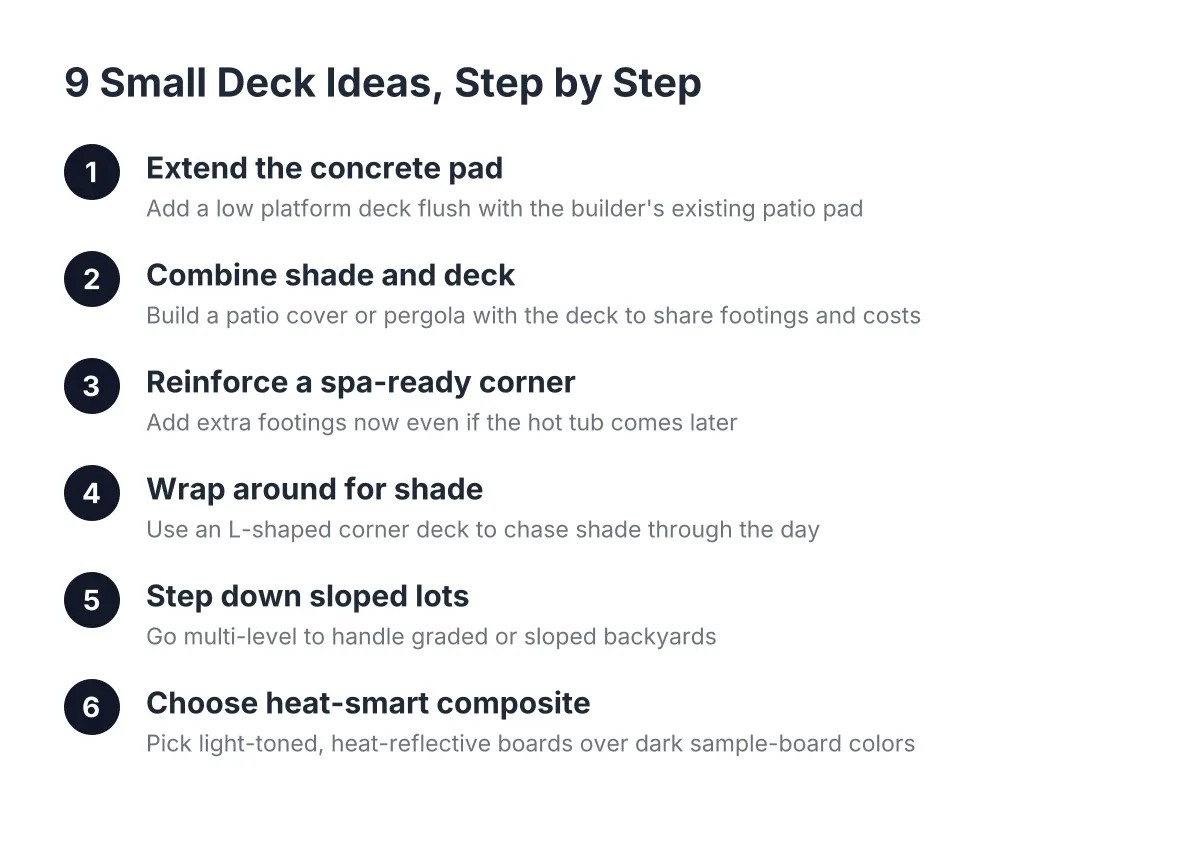
A multi-level deck is a deck built in two or more connected tiers at different heights. Builders use levels to handle sloped yards, separate a dining area from a hot tub zone, or step a deck down toward a pool. Each level adds framing, footings, and often stairs, so cost scales with complexity, not just square footage. On new-build lots with graded yards, levels can turn an awkward slope into usable space; there are layout examples in these backyard deck ideas for new-build Henderson yards.
Hot Tub Deck
A hot tub deck is a deck section framed and supported specifically to carry the weight of a filled spa and the people in it. Water is heavy, so the framing under a hot tub needs more support than a standard deck, often with extra footings and beefed-up joists. Tell your builder about a spa before design starts, even if you plan to buy it later. Retrofitting support under an existing deck costs more than building it in from day one.
Pricing, Permits, and Paperwork
Building Permit
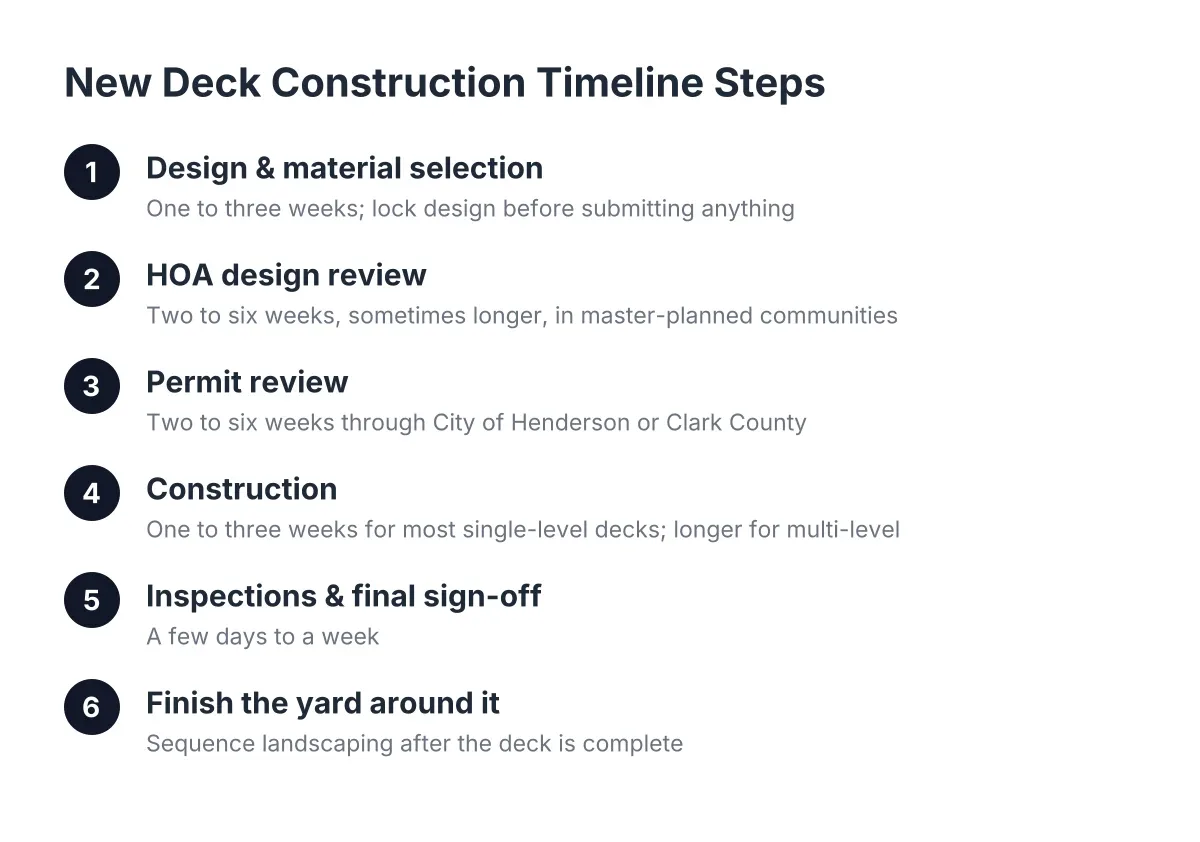
A building permit is the official approval from your city or county that lets construction legally begin. Decks above a certain size or height typically need one, and the permit path in Henderson differs from unincorporated Clark County, so where you live matters. A permitted deck gets inspected, which protects you at resale and in a dispute. Be cautious with any builder who suggests skipping the permit to save time; that risk lands on you, the homeowner.
HOA Design Review
HOA design review is the approval process a homeowners association requires before you change your home's exterior, including decks and patio covers. Master-planned communities around Henderson commonly require drawings, material samples, or color choices before work starts. Approval timelines vary by association and can add weeks to a project schedule. A builder familiar with HOA submittals can help you prepare the package, though the decision always rests with your association.
Setback
A setback is the minimum distance a structure must keep from your property line, set by local zoning rules. Setbacks limit how close a deck or patio cover can sit to a fence or neighbor, and they can reshape a design on a tight lot. Your builder should check setbacks during design, before anything is drawn in stone. On smaller new-build lots, the setback often decides the deck's footprint more than your wish list does, which is a common surprise for buyers of new construction backyard decks.
Load Rating
A load rating is the amount of weight a deck is engineered to support, counting both the structure itself and everything on it. People, furniture, planters, and spas all count toward the load. The rating drives footing size, joist spacing, and beam choices, so it quietly shapes the whole quote. If you plan heavy features, say so up front so the frame is designed for them.
Resurfacing
Resurfacing means replacing the walking surface and sometimes the railing of a deck while keeping the existing frame. It is a repair-and-remodel option, not new construction, and it only makes sense if the frame and footings underneath are still sound. A builder should inspect the structure before quoting a resurface. If they quote one without looking underneath, treat that as a red flag.
Using These Terms
You now have the working vocabulary to read a deck quote line by line and notice what is missing, whether that is footings, railing, or the permit. What this new construction backyard decks glossary gives you is leverage of the honest kind: sharper questions, and a feel for which answers sound like experience. When a builder's explanation matches what you read here, you are probably talking to the right person.
If you need deck construction, Henderson Deck Co can help.
Prefer to talk it through? Call (725) 425-5179 — a quick call is usually the fastest way to get a straight answer for your situation.