Composite vs Wood Deck Repair in Henderson: Durability, Cost, and When Replacement Wins
If your deck is fading, cracking, or splintering after years of Henderson sun, you are probably asking the same question most homeowners ask us: is this a repair, a resurfacing job, or am I looking at full deck replacement cost? The honest answer depends on two things most articles skip. First, what shape the structure underneath is in. Second, what your deck is made of, because composite and wood age in completely different ways out here in the Mojave. This guide walks through both, so you can figure out the most cost-effective fix before you call anyone.
One thing up front. A lot of contractors default to quoting a full rebuild because it is the bigger ticket. That is not always the right answer. Plenty of decks in Green Valley and older Henderson subdivisions have solid frames under ugly surfaces. Those decks need new boards, not new footings. Knowing the difference is where your money is saved or wasted.
How Desert Sun Damages Wood and Composite Differently
Henderson is hard on decks in a specific way. We do not fight rain and rot the way builders in wetter climates do. We fight UV exposure, surface heat, and big daily temperature swings that expand and contract materials over and over.
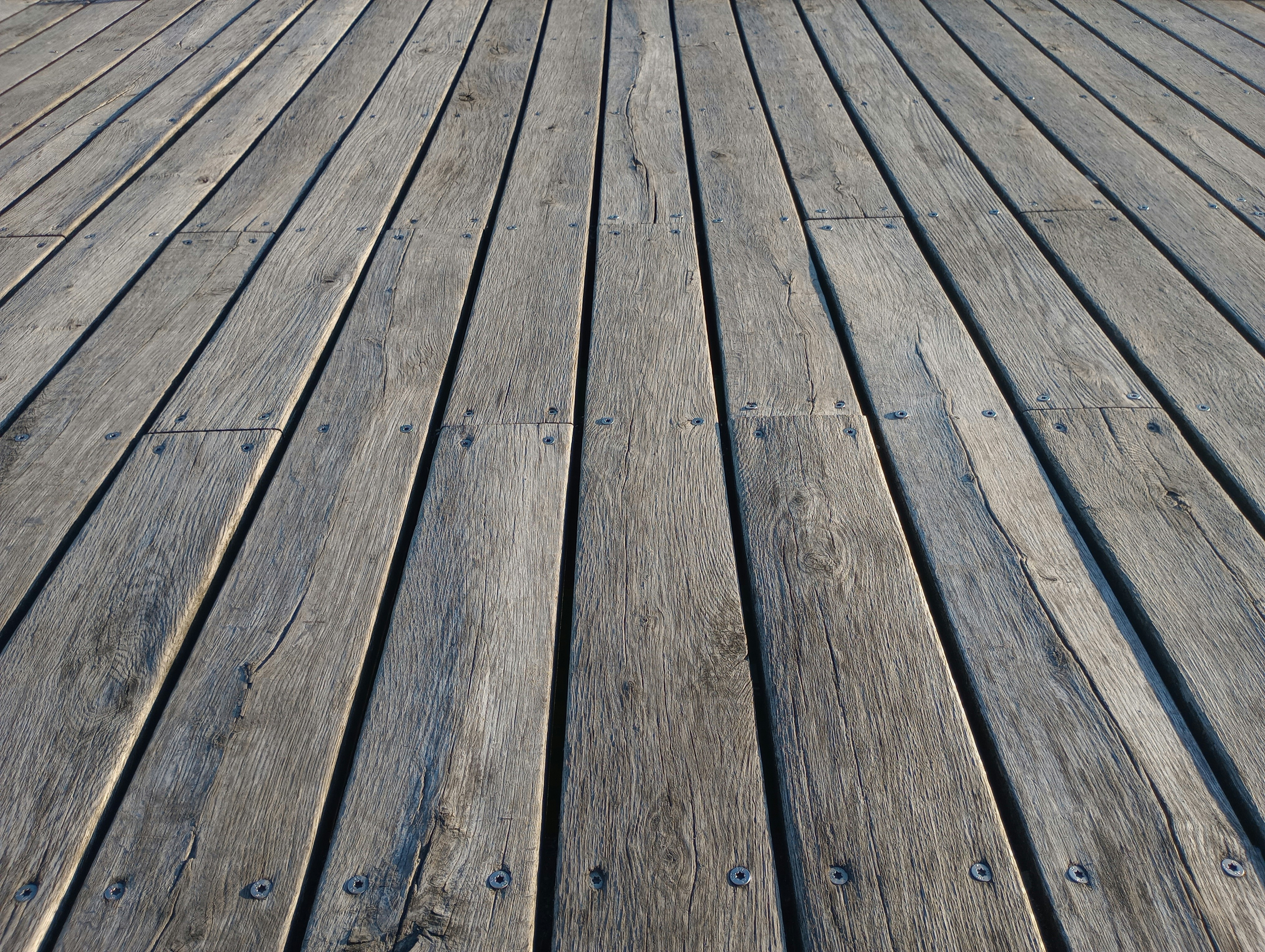
Wood takes that abuse visibly. The sun breaks down the surface fibers, which is why an unmaintained pressure-treated deck turns gray, then starts checking and splintering. The dry heat pulls moisture out of the boards, so they cup, warp, and crack along the grain. Fasteners work loose as boards move. If nobody has sealed or stained the deck in years, the top face of every board suffers while the underside stays protected, which accelerates the cupping.
Composite ages differently. Early-generation composite from the 2000s could fade badly and get chalky under desert sun. Modern capped composite and PVC decking hold color far better because the cap layer is engineered for UV resistance. Composite does not splinter or check. Its weak points in our climate are heat, because dark boards get uncomfortably hot in summer, and thermal movement, which can stress fasteners if the deck was installed without proper gapping.
Here is the practical takeaway. A ten-year-old wood deck in Henderson that was never maintained is usually a surface problem, sometimes a structural one. A ten-year-old composite deck with the same neglect is often still structurally and cosmetically fine, minus some fading. That difference shapes everything about repair versus replacement.
Is My Deck Safe? A Homeowner's Inspection Checklist
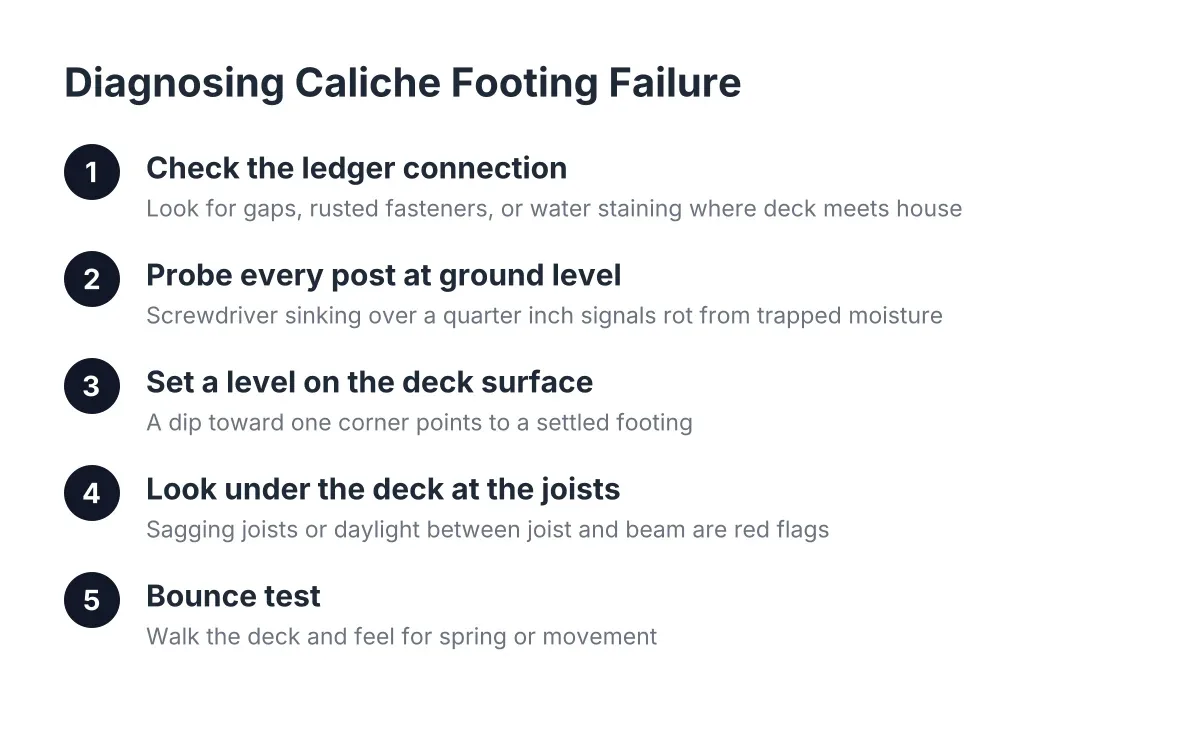
You can answer whether your deck is safe with a screwdriver, a flashlight, and twenty minutes underneath it. The structure matters more than the surface. Cracked or gray boards look bad but rarely make a deck dangerous. Compromised posts, ledger connections, or footings do, and those are the items that decide repair versus rebuild.
Work through this list before you get quotes:
- Ledger board. This is where the deck attaches to your house. Look for gaps, rusted fasteners, or any movement when you push on the deck. Ledger failure is the most common cause of deck collapse anywhere in the country.
- Posts and beams. Probe the base of each post with a screwdriver. Soft spots mean decay. In Henderson, decay is less common than in wet climates, but posts buried in soil or sitting in irrigation overspray can still rot.
- Footings. Look for posts that have shifted, tilted, or heaved. Our desert soil, including the caliche layers common across the valley, behaves differently than soil elsewhere, and footings that were poured shallow or undersized can move over time.
- Joists. Shine a light under the deck. Check for cracks, sagging, or rusted joist hangers. Widespread joist damage pushes you toward rebuild territory.
- Railings. Grab and shake. A deck railing that moves more than slightly is a fall hazard and a code issue, though loose railings are usually a repair, not a rebuild trigger.
- Surface boards. Cupping, splinters, and cracks along the grain. Annoying and sometimes hazardous barefoot, but replaceable without touching the frame.
If the frame checks out and the problems live in the boards and railing, you are a resurfacing candidate. If you found structural issues, get a professional inspection before spending anything on the surface. No article, including this one, replaces having someone who builds decks for a living put eyes on your ledger and footings.
Repair, Resurface, or Replace: Matching the Fix to the Damage
The right fix follows the damage, not the sales pitch. Broadly, deck problems sort into three tiers, and each tier has a proportionate response.
Tier one: spot repairs
A handful of warped or cracked boards, a wobbly railing section, popped fasteners, or one soft stair tread. This is straightforward deck repair. A builder replaces the damaged boards, re-secures or replaces loose railing posts, and swaps rusted hardware. On a wood deck, the new boards will not match the weathered ones until you refinish the whole surface, which is a cosmetic trade-off worth knowing before you start.
Spot repair is the cheapest path by a wide margin. It makes sense when damage is isolated and the deck is otherwise sound. It stops making sense when you are replacing boards every season, because at that point you are paying rebuild money in installments and never getting a new deck for it.
Tier two: resurfacing
Resurfacing means stripping every deck board and railing off a structurally sound frame and installing new decking on the existing joists and posts. This is the sweet spot for a lot of aging Henderson decks. The frame, which is protected from direct sun, often outlasts the surface by a decade or more in our dry climate.
Resurfacing is also the natural moment to switch materials. Many homeowners resurface a splintering wood deck with heat-reflective capped composite, which addresses the two complaints that drove them to fix the deck in the first place: the splinters and the maintenance. One caution: composite is heavier and has different span requirements than wood, so the existing joist spacing has to be verified before boards go down. Sometimes that means adding joists, which adds cost but is still far cheaper than a rebuild.
Resurfacing cost typically lands somewhere between spot repair and full replacement, often around half to two-thirds of the cost of a comparable new deck, as a rough planning estimate. The exact number depends on square footage, the decking material you choose, railing replacement, and whether the frame needs reinforcement.
Tier three: full replacement
Replacement is the answer when the structure itself has failed or was never built right. Shifting footings, a rotted ledger, widespread joist damage, or a frame that will not meet current Clark County or City of Henderson code requirements when you pull a permit. It is also the answer when you want a different deck entirely: bigger footprint, a second level, hot tub support, or integration with a covered patio. You cannot resurface your way to a multi-level deck.
Factors That Drive the Cost of Deck Replacement
Deck replacement cost in Henderson is driven by five main factors: size, material, structural scope, railing, and site conditions including permits and HOA review. No two of those are fixed, which is why quotes vary so widely and why a per-square-foot number from a national deck replacement cost calculator rarely matches a real local bid.
Here is what actually moves the number:
- Size and elevation. Square footage is the baseline, but height matters more than most homeowners expect. A ground-hugging patio deck needs less structure than an elevated deck, and stairs and landings add framing, railing, and labor.
- Decking material. Pressure-treated wood costs the least up front. Capped composite and PVC cost more per board but eliminate staining and sealing, and in our sun that maintenance gap is not theoretical. Within composite, heat-reflective and lighter-colored lines cost more than entry lines and matter for barefoot comfort in July.
- Structural scope. Reusing a sound frame saves real money. New footings in desert soil, especially where caliche has to be dealt with, add excavation labor. Hot tub decks need engineered support that a standard deck frame does not have.
- Railing. People underestimate this one. Deck railing installation can run a meaningful share of total project cost, and the spread between pressure-treated wood rail and powder-coated aluminum or cable rail is wide.
- Permits and design review. Deck projects in Henderson generally go through a city or Clark County permit path, and many master-planned communities add HOA design review on top. Neither is a reason to skip the process, but both add time and some cost to the project.
Be careful comparing your bids to national averages or deck replacement cost per square foot figures you find online. Those numbers blend climates, code environments, and labor markets that have nothing to do with building on desert soil in triple-digit summers. Use them for rough scale, not for judging whether a Henderson bid is fair.
Composite vs Wood: The Repair Math Over Ten Years
The material question changes the long-term math more than any other single choice. Compare what each material asks of you after installation.
A wood deck in Henderson needs cleaning and a fresh coat of stain or sealer on a regular cycle, because our UV exposure breaks down finishes faster than milder climates do. Skip that cycle and the boards gray, check, and splinter, and you are back into repair territory. Deck paint is a tempting shortcut on tired wood, but paint on horizontal deck boards tends to peel under sun and foot traffic, and once it fails you are stripping it before you can do anything else. Refinishing a deck costs less than repair, and repair costs less than resurfacing, but on wood those costs recur. When you compare refinish deck cost over ten years against composite's near-zero surface maintenance, the up-front price gap narrows considerably.
Composite flips the equation. You pay more on day one and then mostly stop paying. No staining, no sealing, no splinter repairs, occasional washing. The trade-offs are honest ones: higher initial cost, surface heat on dark colors, and the fact that composite is a surface material, so it does nothing for a bad frame.
There is also a resale angle worth knowing. According to the 2025 Zonda Cost vs. Value Report, a wood deck addition recoups 95 percent of its cost at resale, while a composite deck addition recoups 89 percent. Wood wins the resale percentage; composite wins the ownership experience in a climate that punishes wood finishes. Neither answer is wrong. It depends on how long you plan to stay and how much maintenance you will actually do.
Suppose a Henderson homeowner has a fifteen-year-old builder-grade wood deck, about the size of a two-car garage bay, with cupped boards and a gray, splintering surface. In that scenario, an inspection finds the frame sound but the joist spacing too wide for composite. An illustrative path: reinforce the joists, resurface with a light-colored capped composite, and replace the wood rail with aluminum. The homeowner pays meaningfully more than a wood-on-wood resurface but roughly half of full deck replacement cost, and the maintenance cycle that caused the problem is gone.
When Repair Money Is Wasted Money
An honest repair-first approach still has to admit when repair is the wrong call. Spending on the surface of a failing structure is the worst outcome, because you pay twice: once for the resurface and again for the rebuild it did not prevent.
Repair or resurfacing stops making sense when:
- The ledger, posts, or footings show movement or decay. Structure first, always.
- The frame cannot be brought to current code as part of a permitted project without near-total reconstruction.
- Your repair history shows you fixing something every year. Recurring spot repairs on aging wood are a rebuild in slow motion.
- You want the deck to do something different: support a hot tub, connect to a covered patio, or add a level. Retrofitting those onto an old frame usually costs more than designing for them from the start.
The same logic applies in reverse. If a contractor quotes you a full rebuild without getting under the deck to inspect the frame, that quote is a guess at best and an upsell at worst. Any deck builder recommending replacement should be able to tell you specifically what failed and show you.
How to Get Quotes You Can Actually Compare
Vague quotes are the number one complaint we hear from homeowners planning this project, so structure the conversation yourself. Ask every deck repair contractor near you for the same three numbers: spot repair of the specific damage, resurfacing on the existing frame, and full replacement. A builder who understands deck repair and resurfacing as a distinct service, rather than a line item under general contracting, should be able to price all three paths and explain the trade-offs between them.
Then ask what is included. Does the resurfacing price cover railing, or is that separate? Does the replacement price include demolition and haul-away, permit fees, and HOA submittal drawings if your community requires design review? Is the frame inspection part of the estimate, and what happens to the price if hidden joist damage turns up mid-project? Getting those answers in writing is your best protection against the estimate ballooning later.
Finally, ask about material specifics for our climate. Which composite lines run cooler underfoot. How footings will be handled in local soil. Whether the design leaves room for shade, because a deck in a Henderson backyard without a patio cover or shade plan gets used three seasons instead of four. The builders worth hiring answer those questions plainly, before you ever commit, because they answer them every week. That conversation, more than any online calculator, is how you land on the fix that matches your deck, your budget, and how you actually want to use your backyard.
If you need deck construction, Henderson Deck Co can help.
Prefer to talk it through? Call (725) 425-5179 — a quick call is usually the fastest way to get a straight answer for your situation.