Deck Repair and Resurfacing Terms Explained: A Plain-English Glossary
If you're getting quotes to fix up a tired deck in Henderson, the paperwork can read like another language. This deck repair and resurfacing glossary translates the terms you'll see on estimates and hear from a deck builder into plain English. Use it to read a quote line by line, ask sharper questions, and spot problems on your own deck before they grow. Every entry stands on its own, so skip straight to the word that confused you.
- Resurfacing: new deck surface, old frame stays
- Deck Boards (Decking): the boards you walk on
- Substructure (Framing): the hidden skeleton underneath
- Joists: the beams that hold the boards
- Ledger Board: where the deck meets the house
- Footings: the concrete anchors in the ground
- Caliche: hard desert soil layer that fights digging
- Dry Rot: fungus that crumbles wood
- UV Degradation: sun damage that fades and weakens
- Fastener Failure: popped screws and loose nails
- Composite Decking: wood-plastic boards, low upkeep
- PVC Decking: all-plastic boards, no wood at all
- Capped Boards: a protective shell on composite
- Heat-Reflective Decking: boards built to run cooler
- Sistering: doubling up a weak joist
- Refinishing: sanding and sealing wood boards
- Scope of Work: the written list of what gets done
- Permit: the city's sign-off on structural work
- HOA Design Review: your community's approval step
The Parts of Your Deck
Most confusion starts with anatomy. When a deck builder says your boards are fine but your framing is not, these are the parts they mean.
Deck Boards (Decking)
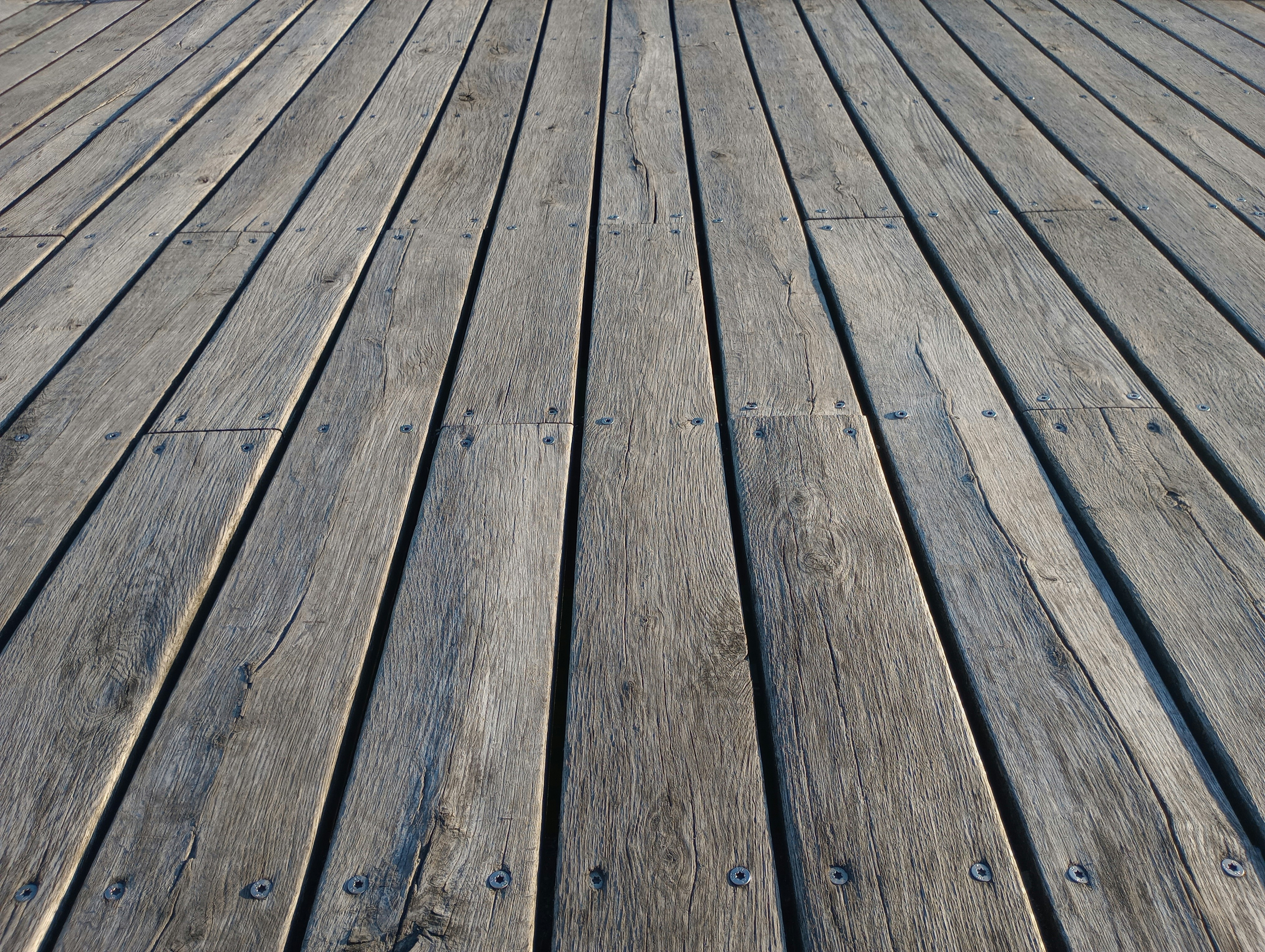
Deck boards, also called decking, are the surface boards you walk on. They take all the abuse: foot traffic, furniture, spilled drinks, and in Henderson, brutal summer sun. Because they wear out faster than the structure below, boards are often the first thing replaced. If a quote says "replace decking only," the contractor believes your frame is still sound.
Substructure (Framing)
The substructure is the hidden frame of posts, beams, and joists that holds up your deck boards. Its condition decides whether resurfacing makes sense at all: new boards on a rotten frame is money wasted. A good contractor inspects the substructure before quoting. If they price the job without crawling underneath, treat that as a red flag.
Joists
Joists are the horizontal framing boards that run under your decking and carry its weight. Deck boards screw directly into them, so joist spacing and condition matter for any resurfacing job. Some composite boards need tighter joist spacing than old wood decking used, which can add framing work to a resurfacing quote. Ask whether your existing joists work with the new boards.
Ledger Board
A ledger board is the framing board that attaches your deck to the house and carries part of its load. It is one of the most common failure points on any deck, because water and bad flashing let rot start where you cannot see it. A failed ledger can drop a deck. If an inspector or contractor mentions ledger problems, take it seriously; that is structural repair, not cosmetic work.
Footings
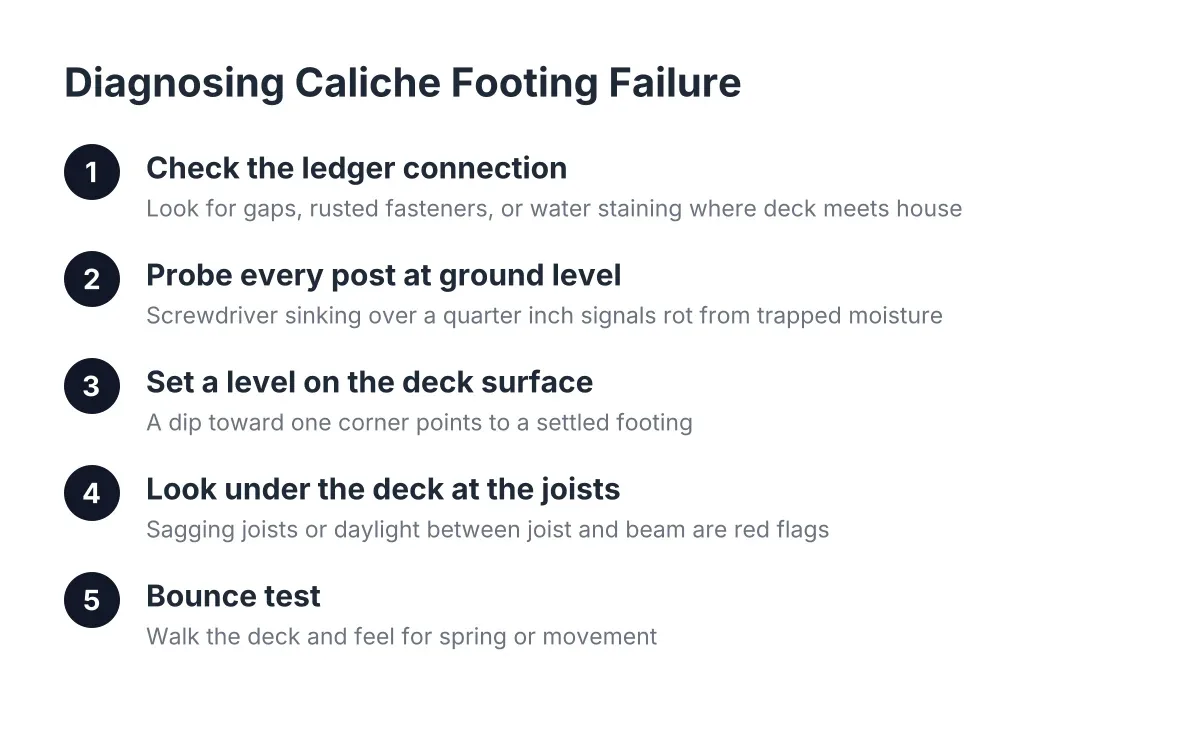
Footings are the concrete bases in the ground that support a deck's posts. They keep the deck from sinking, shifting, or tipping. Around Henderson, digging footings often means dealing with dense desert soil, which affects labor. If a repair quote includes footing work, the contractor found movement or settling, which is a structural issue rather than surface wear.
Caliche
Caliche is a hard, cement-like layer of mineral-bound soil common in the Mojave Desert. It can be tough to dig through, so footing work in Henderson yards sometimes takes special tools and more labor than the same job elsewhere. You do not need to solve caliche yourself; you just need to know why a line item for excavation or footing repair might look higher here than in an online national estimate.
Damage and Wear Terms
These are the words that show up on inspection reports and repair quotes when something has gone wrong.
Dry Rot
Dry rot is fungal decay that breaks down wood fibers, leaving boards soft, crumbly, or spongy. Despite the name, it starts with moisture, often from sprinklers, planters, or poor drainage. Rot in deck boards means replacement; rot in joists or the ledger means structural repair. Poke suspect wood with a screwdriver: if it sinks in easily, get it looked at.
UV Degradation
UV degradation is damage caused by the sun's ultraviolet rays, which fade color and slowly break down the surface of both wood and composite boards. In the Las Vegas Valley, intense sun makes this the top wear driver on decks, ahead of moisture. Faded, chalky, or cracking board surfaces are its signature. This is why material choice matters so much here; some boards resist UV far better than others, and this repair-first guide to composite decks in desert heat walks through the warning signs.
Fastener Failure
Fastener failure means the screws or nails holding your deck boards have loosened, popped up, or corroded. Popped fasteners cause squeaks, wobbly boards, and stubbed toes, and they often signal that boards are expanding and contracting with temperature swings. Sometimes re-fastening fixes it; sometimes it points to boards or joists at the end of their life. A contractor who checks fasteners board by board is doing the job right.
Materials, Methods, and Deck Repair Resurfacing
When you compare resurfacing bids, most of the price difference lives in this section. Any deck repair and resurfacing glossary earns its keep here, because material names get thrown around loosely.
Resurfacing
Resurfacing means removing the old deck boards and railing and installing new ones on the existing frame. It costs less than a full rebuild because the substructure, footings, and posts stay in place. It only makes sense when that frame is sound, which is why deck repair and resurfacing quotes should always start with a structural inspection. If your framing has rot or movement, a rebuild may win; this comparison of repair versus replacement for composite and wood decks explains where that line falls.
Composite Decking
Composite decking is board material made from a blend of wood fibers and plastic, designed to resist rot, insects, and fading better than plain wood. It costs more up front than wood but skips the sanding, staining, and sealing cycle. For Henderson decks, the key question is heat and UV performance, not just looks. Ask any bidder which composite lines they install and why those hold up in desert sun.
PVC Decking
PVC decking is board material made entirely of plastic, with no wood content at all. Because there are no wood fibers, it cannot rot and shrugs off moisture completely, which makes it popular around pools and hot tubs. It typically costs more than composite. If your deck wraps a pool or supports a hot tub, PVC deserves a spot on your comparison list.
Capped Boards
A capped board is a composite or PVC deck board wrapped in a tougher outer shell that resists stains, scratches, and fading. The cap is what keeps the color from washing out under desert sun. Uncapped composite was common years ago and faded fast; nearly all quality boards today are capped. If a low bid uses uncapped or bargain boards, that is where the savings came from.
Heat-Reflective Decking
Heat-reflective decking is board material engineered to absorb less heat from sunlight, so the surface stays cooler underfoot. On a Henderson afternoon, standard dark boards can get too hot for bare feet, which matters if kids or pets use the deck. Lighter colors and heat-reflective technology both help. This is a question worth asking every bidder, because two boards that look alike can feel wildly different in July.
Sistering
Sistering means attaching a new framing board alongside a weakened joist to restore its strength. It lets a contractor fix isolated frame damage without rebuilding the whole substructure, which keeps resurfacing on the table. Seeing "sister joists" on a quote is usually good news: the frame has problems, but targeted repair can handle them. Ask how many joists need it and why.
Refinishing
Refinishing means sanding a wood deck's surface and applying new stain or sealer, without replacing boards. It is the cheapest way to revive a wood deck that is faded but structurally fine. In desert sun, refinishing is maintenance you repeat every few years, not a one-time fix. If you are weighing refinishing against resurfacing, the deck refinishing timeline for Henderson projects shows what each path involves.
Paperwork and Pricing Terms
Scope of Work
A scope of work is the written section of a quote that lists exactly what the contractor will do, item by item. It is the single most useful part of any bid, because it lets you compare two prices fairly. If one quote includes joist repair and new railing while another covers boards only, the cheaper number is not the better deal. Never accept a one-line scope for structural work; the cost guide for deck repair and resurfacing breaks down what a complete quote should itemize.
Permit
A permit is official approval from your city or county to do construction work, issued before the job starts. Repairs that touch structure, like ledger or footing work, often need one; check your local requirements, because rules vary by city in the Las Vegas Valley. A contractor who handles permitting for you is taking on paperwork and inspections, which is worth something. One who suggests skipping a needed permit is handing you the risk.
HOA Design Review
HOA design review is the approval process a homeowners association uses to sign off on changes visible from outside your home, including deck materials and colors. Many Henderson neighborhoods sit in master-planned communities where this step is required before work begins. Board color, railing style, and cover height are common review items. Ask your bidder whether they will prepare the drawings and material samples the HOA wants, because a rejected submission stalls the whole project.
Using These Terms
You now have the vocabulary to read a repair quote line by line instead of just comparing bottom-line numbers. When a contractor mentions sistering joists or capped boards, you will know whether that means a bigger job or a smarter one. That is what this deck repair and resurfacing glossary is for: fewer surprises, better questions, and a deck decision you can defend.
If you need deck construction, Henderson Deck Co can help.
Prefer to talk it through? Call (725) 425-5179 — a quick call is usually the fastest way to get a straight answer for your situation.