Deck Refinishing Timeline: How Long Does Resurfacing Take in Henderson?
If your deck looks gray, cracked, or splintered, the fix is often smaller than you think. Most Henderson homeowners asking about a deck refinishing timeline want to know how long the work takes, and whether a refinish will actually hold up, before a builder starts pushing a full rebuild. Here is the honest answer: a straightforward refinish usually runs two to five working days, a resurfacing project runs one to two weeks, and only a deck with real structural damage needs a rebuild. This guide walks through the process step by step so you know what happens each day, what can stretch the schedule, and how to tell which fix your deck actually needs.
One note before the steps. Refinishing, resurfacing, and rebuilding are three different jobs with three different timelines:
- Refinishing means cleaning, sanding, repairing minor damage, and applying new stain or sealer to the boards you already have. Typical timeline: two to five days.
- Resurfacing means removing the walking surface and railing but keeping the frame, then installing new boards, often composite. Typical timeline: one to two weeks.
- Rebuilding means tearing everything out, including the frame and footings, and starting over. Typical timeline: several weeks, plus permit time.
The steps below cover refinishing and resurfacing, with clear checkpoints for when the honest answer is a rebuild.
Step 1: Inspect the Frame Before You Touch the Surface
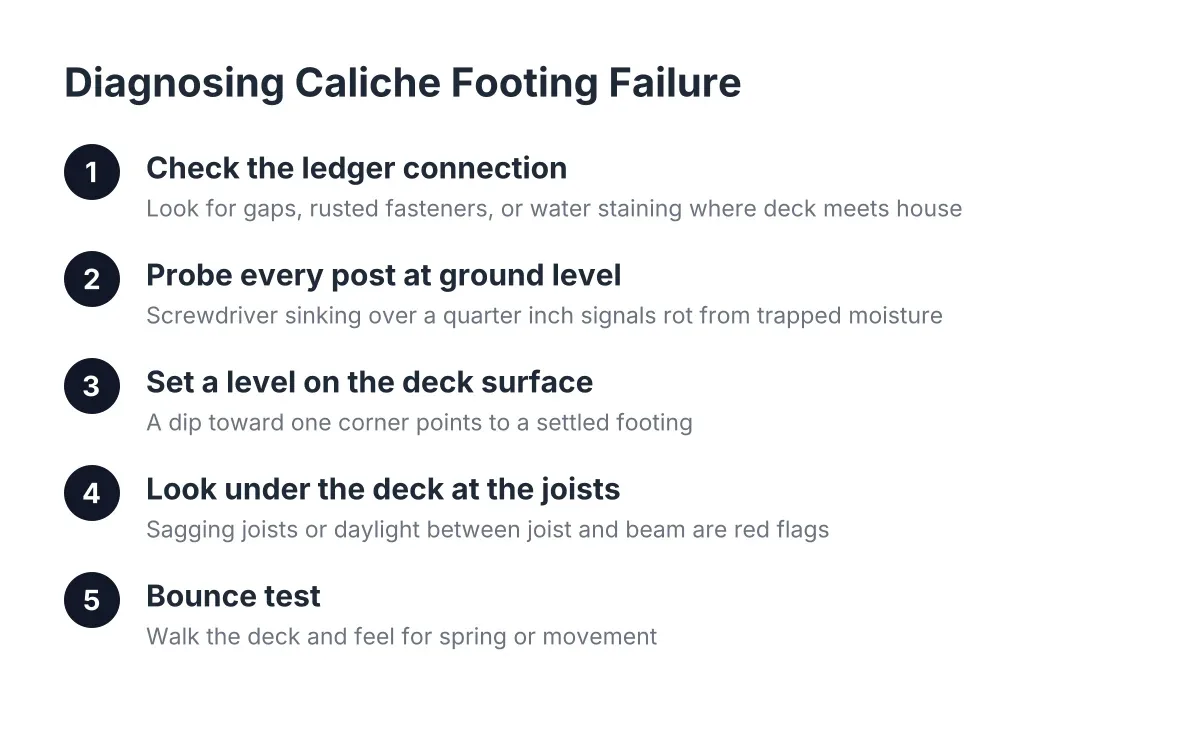
Start underneath, not on top. The boards you walk on are cosmetic; the joists, beams, ledger, and posts underneath are structural. If the frame is solid, you can refinish or resurface. If it is not, no amount of sanding and staining will make the deck safe, and money spent on the surface is wasted.
Crawl under the deck with a flashlight and a screwdriver. Probe the joists, the ledger board where the deck attaches to the house, and the base of each post. Solid wood resists the screwdriver. Soft, spongy wood that the tip sinks into means rot, and rot in framing members changes the whole conversation.
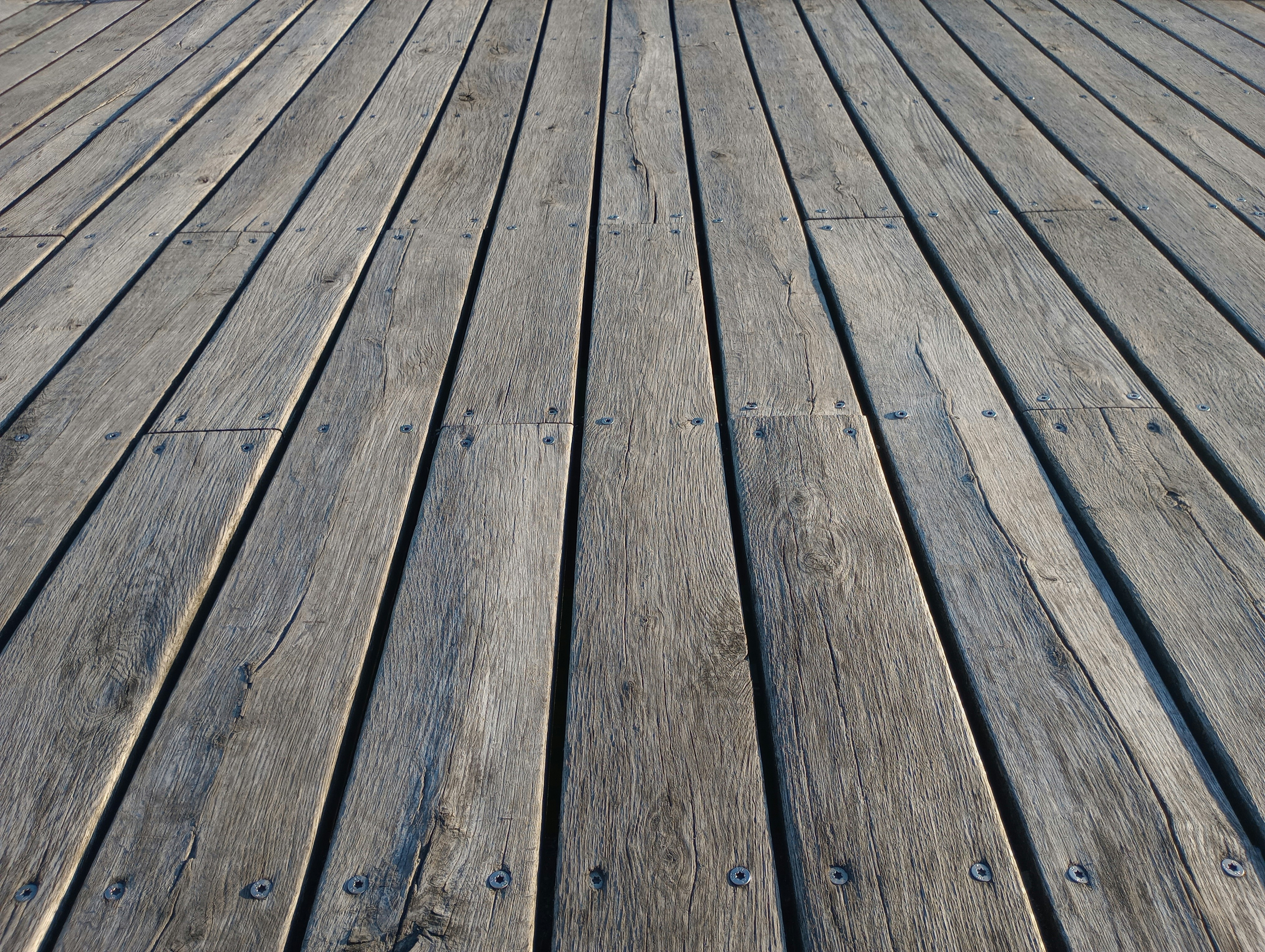
In Henderson, sun damage is the usual enemy, not moisture. Desert UV cooks the top surface while the frame underneath often stays in decent shape. That is good news for the repair-first approach: gray, checked, splintered boards on top of a sound frame is the classic candidate for refinishing or resurfacing rather than replacement.
One structural exception matters for spa owners. If you are placing a hot tub on the deck, a frame that passes a basic rot check may still be undersized for the load. A filled spa concentrates serious weight in a small footprint, and a hot tub deck needs framing and footings rated for it. Have a deck builder evaluate the structure against your specific spa model before delivery day, not after.
Step 2: Decide Between Refinishing, Resurfacing, and Rebuilding
The frame inspection gives you the answer. Use these rules of thumb:
- Refinish if the frame is sound and the boards are faded, rough, or lightly checked but still flat and solid. This is the fastest and cheapest path.
- Resurface if the frame is sound but the boards are badly cupped, deeply cracked, or rotting in multiple spots. Warped deck boards past a certain point will not sand flat, and replacing the surface costs less than fighting it.
- Rebuild if the ledger, joists, or posts show rot, the footings have shifted, or the deck was never built to code. In that scenario, a refinish just paints over a safety problem.
A word on patch products. Bondo wood filler and similar epoxy fillers can rescue a single gouged or partially rotted board, and they are a legitimate answer to how to repair rotting wood without replacing it, in small doses. Dig out the soft material, fill, sand, and refinish. However, if you are filling more than a handful of spots, the boards are telling you they are done, and resurfacing is the better spend.
This decision point is exactly where deck repair and resurfacing quotes go sideways for homeowners. A vague quote that jumps straight to a rebuild without showing you the frame condition deserves a second opinion. A builder should be able to point at specific rot, specific undersized members, or specific footing problems before recommending you spend rebuild money.
Step 3: How Weather and Repairs Affect Your Deck Refinishing Timeline
A deck refinishing timeline runs long for predictable reasons, and most of them are avoidable with planning. Weather is the big one. Stains and sealers have temperature limits, and Henderson summers blow past them. Applying finish to a board surface that has been baking in July sun causes the product to flash off before it penetrates. Spring and fall are the working windows; a summer refinish often means starting at dawn and stopping by late morning, which stretches a three day job across a week.
Repairs are the second schedule risk. Every popped fastener, cracked board, and loose railing post found during prep adds time. A deck that needs a dozen board replacements before sanding can add one to two days.
Drying time is the third. Wood needs to be dry before sanding and dry again after washing before stain goes on. The desert helps here; a wash that would need two drying days in a humid climate is often ready the next morning in Henderson.
For a typical wood deck in decent shape, plan on this sequence:
- Day 1: Repairs, fastener resets, and washing.
- Day 2: Drying, then sanding once moisture is out of the boards.
- Day 3: First coat of stain or sealer.
- Day 4: Second coat if the product calls for it, then cure time before furniture goes back.
Resurfacing follows a longer arc: one to three days of demolition, a day or two of frame repairs and blocking, then several days of new board and deck railing installation depending on size and layout complexity.
Step 4: Prep the Deck So the Work Starts on Schedule
Clear everything before the crew arrives. Furniture, planters, grills, and rugs all have to come off, and doing it yourself the weekend before saves billable hours. Trim back any landscaping that overhangs the deck; if you just finished a backyard landscaping project, protect new plants near the deck edge from wash runoff and sanding dust.
Next, handle water and power access. Washing needs a working hose bib, and sanders need outdoor outlets. Confirm both work before day one.
If the project is a resurface rather than a refinish, check whether your community requires design review. Many Henderson master-planned neighborhoods want to approve visible changes like new board color or railing style. HOA review is a common reason a two week resurfacing project turns into a six week wait, so submit early. Simple like-for-like refinishing usually does not trigger review, but confirm with your association rather than assuming.
Step 5: Wash, Sand, and Repair in the Right Order
Order matters. Wash first, because sanding dirty wood grinds grime into the grain. Use a deck cleaner and a low-pressure rinse; high pressure on sun-dried desert boards tears up soft grain and creates fuzz you then have to sand off.
Let the deck dry fully, then make repairs. Replace boards that failed the flatness test, reset proud fasteners below the surface, and fill isolated damage with wood filler. Do repairs before sanding so the new boards and filled spots get blended in.
Then sand. The goal is opening the wood grain so stain penetrates, not furniture-grade smoothness. Badly checked boards on a Henderson deck often need an aggressive first pass because UV damage hardens the surface layer.
Step 6: Apply the Finish or the New Surface
For a refinish, choose the stain with the desert in mind. Semi-transparent penetrating stains handle UV better than film-forming products, which tend to peel under intense sun and then require full stripping at the next refinish. That single product choice affects how long every future deck refinishing timeline runs, because stripping a peeled film coat can double the prep days.
For a resurfacing project, this is where material choice pays off long term. A liquid deck resurfacer can bridge small cracks on a concrete patio, but on a wood-framed deck the durable move is new boards. Heat-reflective composite and PVC boards built for hot climates resist the UV fade that killed the old wood surface, and they end the refinish cycle entirely. The trade-off is honest: composite costs more up front and surfaces still get hot in summer sun, so lighter colors and shade from a patio cover matter.
Resale math supports doing the job right either way. In the 2025 Zonda Cost vs. Value Report, a wood deck addition recoups 95% of its cost at resale while a composite deck addition recoups 89%, according to Zonda and the National Association of the Remodeling Industry.
Step 7: Let It Cure, Then Set a Maintenance Rhythm
Do not rush the last step. Stain needs cure time before foot traffic and more before furniture; putting a heavy planter on day-old stain leaves a permanent ring. Composite needs no cure, which is one more reason resurfacing crews can hand a deck back the same day boards go down.
After that, protect the investment. Suppose a homeowner in Green Valley refinishes a fifteen year old wood deck this spring; in that scenario, a light wash each year and a maintenance coat every two to three years keeps the surface ahead of the sun, while skipping maintenance restarts the full timeline in about four years. Desert UV shortens recoat intervals compared to milder climates, so watch for fading rather than following a calendar from a stain can.
When to Bring In a Deck Builder Instead of DIY
Refinishing a sound deck is a fair weekend project for a handy homeowner. Resurfacing, frame repairs, ledger work, and anything involving a hot tub load are builder territory. Structural mistakes on a deck are not cosmetic mistakes; a failed ledger connection is how decks collapse, and a spa platform that was never load-rated is a risk sitting under a thousand pounds of water. When the inspection in Step 1 turns up anything soft, shifted, or undersized, get a professional evaluation before spending anything on the surface.
The repair-first logic still holds either way. Diagnose the frame, match the fix to the actual damage, and plan the schedule around weather, repairs, and cure time. Do that, and the question of how long deck refinishing takes has a short answer: less time than you feared, and far less money than the rebuild you may not need.
If you need deck construction, Henderson Deck Co can help.
Prefer to talk it through? Call (725) 425-5179 — a quick call is usually the fastest way to get a straight answer for your situation.