Deck Railing Installation Terms Explained: A Plain-English Glossary
If you're comparing quotes for a new or replacement deck railing in Henderson, the paperwork fills up fast with words like "baluster," "post-to-deck mounting," and "graspable handrail." This deck railing installation glossary translates those terms into plain English so you can read a quote line by line, ask better questions, and spot a thin bid before you sign it. Every entry starts with a one-sentence definition you can quote on its own. The rest tells you why the term matters for cost, safety, or desert durability.
- Baluster: the vertical bars between posts
- Post: the structural upright that holds everything
- Top Rail and Bottom Rail: the horizontal pieces balusters attach to
- Handrail: the graspable rail along stairs
- Cable Railing: horizontal steel cables instead of bars
- Glass Panel Railing: glass infill for open views
- Composite Railing: wood-plastic railing that resists sun fade
- Powder Coating: baked-on finish for metal railing
- Infill: whatever fills the space between posts
- Post Mount (Surface Mount vs. Fascia Mount): how posts attach to the deck
- Blocking: hidden framing that stiffens post connections
- Guardrail Height: the minimum height code requires
- Baluster Spacing (the 4-Inch Sphere Rule): the gap limit that keeps kids safe
- Load Requirements: the push and pull a railing must survive
- Linear Foot: how railing gets measured and priced
- Permit: the city or county sign-off on the work
- HOA Design Review: your community's approval step
- Retrofit: new railing on an existing deck
Railing Parts and Materials: A Deck Railing Installation Glossary
These are the words a deck builder uses to describe the pieces of a railing system. Knowing them helps you compare deck railing installation quotes that describe the same thing in different ways.
Baluster
A baluster is one of the vertical bars that fill the space between railing posts. Some quotes call them spindles or pickets; all three words mean the same thing. Baluster material and style drive a lot of the visual look and part of the price, since a fancier profile costs more per piece. In the Mojave sun, metal and composite balusters hold their color better than painted wood.
Post
A post is the structural upright that carries the railing and anchors it to the deck frame. Posts do the real safety work; balusters mostly fill space. When you lean on a railing, the load travels through the posts into the deck framing below. A quote that skimps on post count or post hardware is skimping on the part that matters most.
Top Rail and Bottom Rail
The top rail and bottom rail are the horizontal members that the balusters attach to between posts. The top rail is what your hand and forearms rest on, so its width, shape, and surface temperature matter more than you'd think. On a Henderson deck in July, a dark metal top rail in full sun gets painfully hot, which is one reason builders here often suggest lighter colors or composite caps.
Handrail
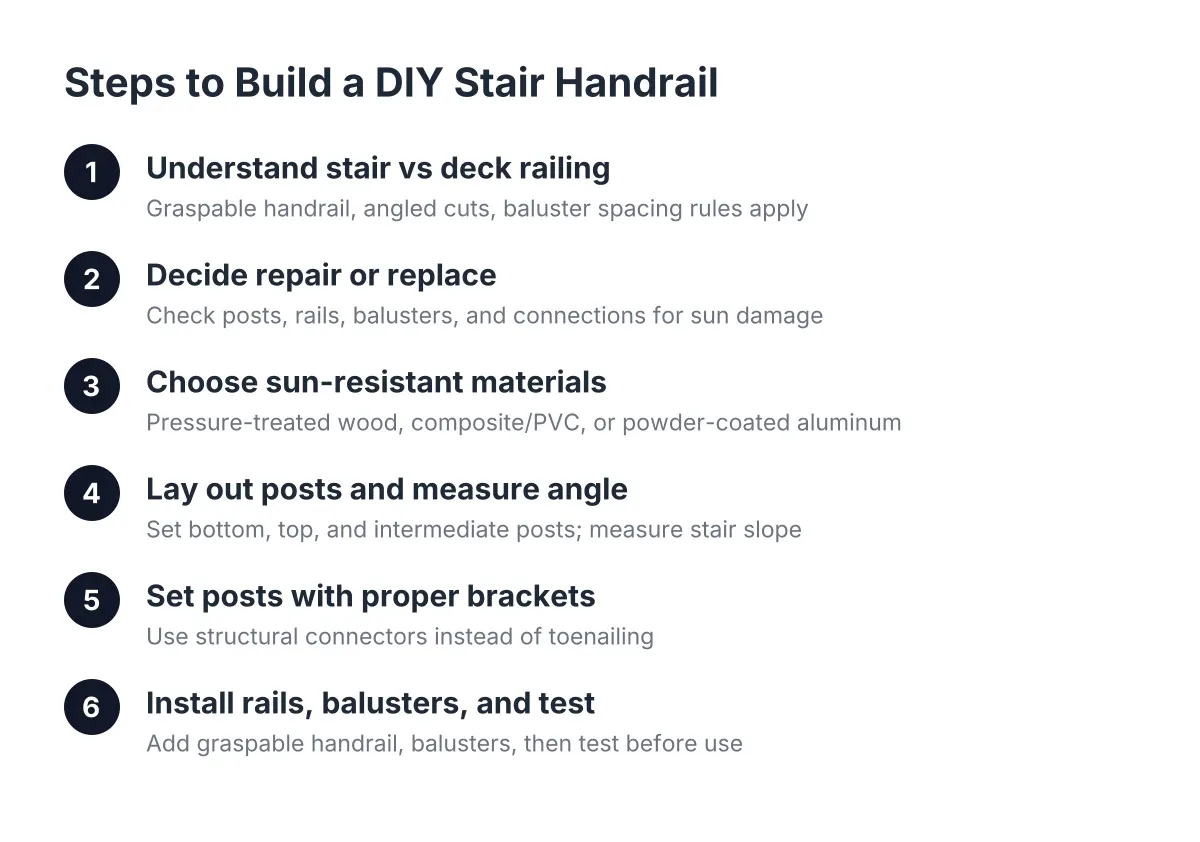
A handrail is the graspable rail that runs alongside stairs so you have something to hold while climbing. It is a separate requirement from the guardrail around the deck edge, and codes generally require it to be a size and shape a hand can wrap around. A wide, flat top rail can look great on the deck but usually cannot double as a stair handrail. If your deck has steps, expect the quote to include a handrail line item.
Cable Railing
Cable railing is a system that uses thin, tensioned steel cables as the infill instead of vertical bars. Homeowners choose it for open sightlines, which is a real draw when your backyard faces desert views or a pool. It costs more than standard balusters because the posts must resist the constant pull of the cables, and the cables need periodic re-tensioning. If a bid for cable railing is cheap, ask how the posts are reinforced.
Glass Panel Railing
Glass panel railing uses tempered glass sheets between posts in place of balusters or cables. It gives the most open view and blocks wind, which some Henderson homeowners like around a pool deck. Tradeoffs: glass shows dust and hard-water spots fast in the desert, and it traps heat rather than letting breezes through. It sits at the higher end of infill options for both material and labor.
Composite Railing
Composite railing is made from a blend of wood fibers and plastic, formed into rail and baluster shapes that never need staining. For desert decks, its main appeal is resistance to UV fade and the cracking that dry heat causes in wood. It runs more than pressure-treated wood up front but saves the repainting cycle. Many composite deck projects pair composite railing with the deck boards for a matched look.
Powder Coating
Powder coating is a dry finish that gets baked onto metal railing at the factory, creating a tougher skin than regular paint. It matters here because intense UV and heat break down ordinary painted finishes fast. A quote for aluminum or steel railing should say whether the finish is powder coated. If it doesn't, ask; a bare or spray-painted metal railing in the Las Vegas Valley will show it within a few summers.
Infill
Infill means whatever fills the open space between the posts and rails: balusters, cables, glass, or mesh panels. Builders use the word as a category, so a quote might read "railing with cable infill." Infill choice is the single biggest style and price lever in most railing projects. Swapping infill is also a common deck remodel move when the posts and frame are still sound.
How Railings Attach and Stay Safe: A Railing Installation and Glossary of Deck Safety Terms
This is where quotes get technical and where quality actually lives. The attachment details below separate a railing that wobbles in two years from one that doesn't.
Post Mount (Surface Mount vs. Fascia Mount)
A post mount is the hardware and method used to fasten a railing post to the deck. Surface mounting bolts the post to the top of the deck; fascia mounting bolts it to the outside face of the frame, which keeps the deck surface clear. Fascia mounting usually takes more labor and hardware, so it costs more, but it can free up floor space on a small patio deck. Either way, the mount is only as strong as the framing behind it, which is the next term.
Blocking
Blocking is extra lumber added inside the deck frame to give railing posts something solid to bolt into. You never see it once the deck boards go down, but it is the difference between a post that holds under a hard lean and one that flexes. During deck railing installation on an existing deck, a builder may need to open up boards to add blocking, which adds labor to the quote. If a bid seems low for a retrofit, ask whether blocking is included.
Guardrail Height
Guardrail height is the minimum height a deck railing must reach, measured from the deck surface to the top of the rail. Codes set the minimum based on how far the deck sits above the ground; check your local code or ask your builder for the number that applies to your deck. Taller decks and multi-level decks trigger the requirement; a low patio deck near grade sometimes does not. Your builder should confirm which rule applies before quoting.
Baluster Spacing (the 4-Inch Sphere Rule)
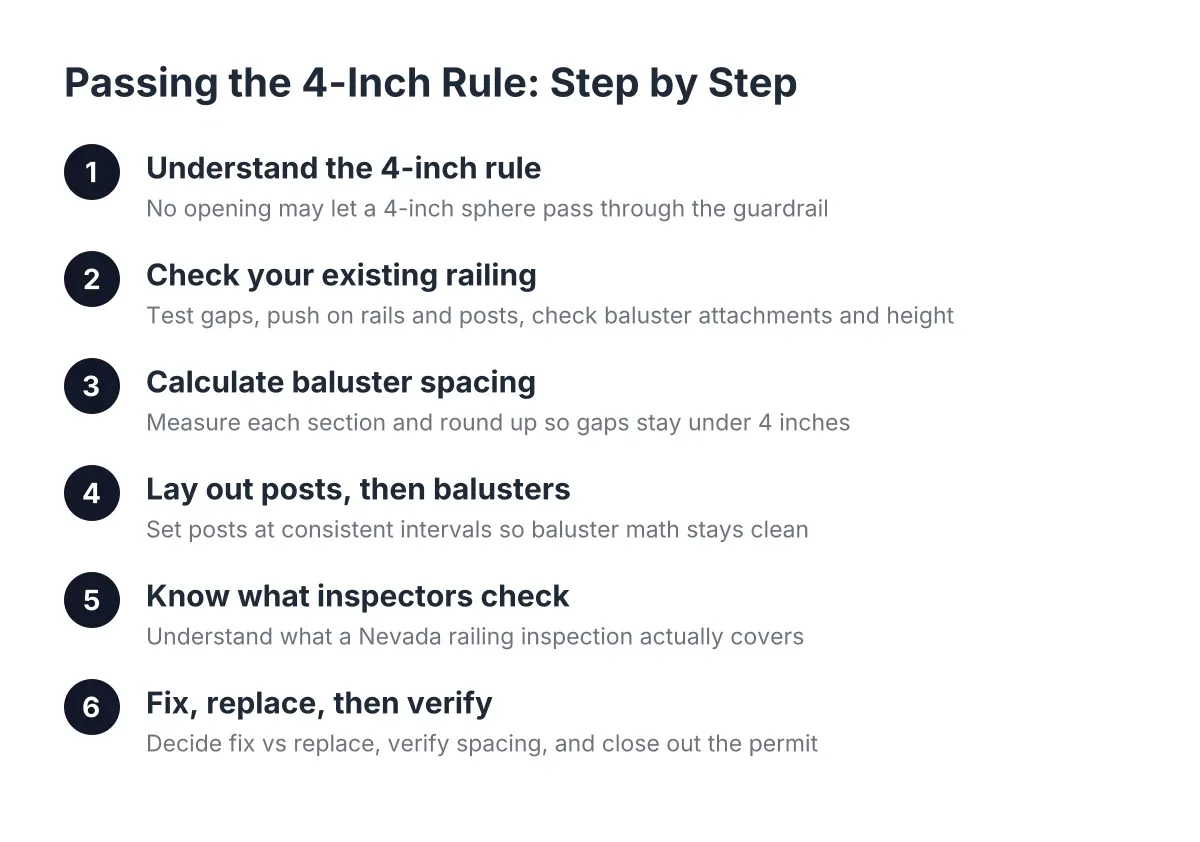
Baluster spacing is the maximum gap allowed between balusters, commonly described as a gap small enough that a 4-inch sphere cannot pass through. The rule exists to keep small children from slipping through or getting stuck. It affects cost directly: tighter spacing means more balusters per foot. A design sketch with wide, airy gaps between bars may look clean but will not pass inspection.
Load Requirements
Load requirements are the amounts of force a railing must withstand from pushing, leaning, or impact without failing. Inspectors care about this, and so should you, because a railing's whole job is holding a person who stumbles against it. Load requirements are why post spacing, hardware, and blocking are specified rather than improvised. A builder who talks about load paths instead of just looks is thinking about the right things.
Retrofit
A retrofit means installing new railing on an existing deck rather than as part of new construction. Retrofits are common in deck repair and deck remodel projects where the frame is sound but the old railing is loose, faded, or out of date. They can cost more per foot than railing on a new build because the builder works around existing boards and framing. Expect the builder to inspect the frame first; rotted or undersized framing changes the scope.
Pricing and Paperwork
Linear Foot
A linear foot is a straight-line measurement of length, and it is how most railing gets priced: dollars per foot of railing run. Measure around your deck's open edges and stairs and you have a rough count to compare bids against. Corners, stairs, and gates usually add cost beyond the simple footage. For a fuller breakdown of what drives the number, see our guide to deck railing installation cost.
Permit
A permit is the official approval from your city or county that allows the railing or deck work to proceed and be inspected. In the Las Vegas Valley, the permit path depends on where you live, whether inside Henderson city limits or in unincorporated Clark County. Railing tied to a new deck, a hot tub deck, or a structural change is more likely to need one than a simple like-for-like swap. A quote should say who pulls the permit; a builder who shrugs at the question is a warning sign.
HOA Design Review
HOA design review is the approval process your homeowners association runs before you change anything visible from outside your home. In Henderson's master-planned communities, that often includes railing style, color, and height. Submitting drawings and waiting on the committee adds time before construction can start, so build it into your schedule. A local deck builder should be able to prepare the drawings the review typically asks for; no builder can promise the outcome.
Using These Terms
You now have the vocabulary to read a railing quote the way a builder does: posts and blocking for strength, infill for style, linear feet for price, permits and HOA review for timing. What this deck railing installation glossary gives you is not expertise, just enough footing to ask sharp questions and notice when a bid leaves something out. Keep it open the next time a quote lands in your inbox.
If you need deck construction, Henderson Deck Co can help.
Prefer to talk it through? Call (725) 425-5179 — a quick call is usually the fastest way to get a straight answer for your situation.