Trex vs. Timbertech: Which Is Right for You?
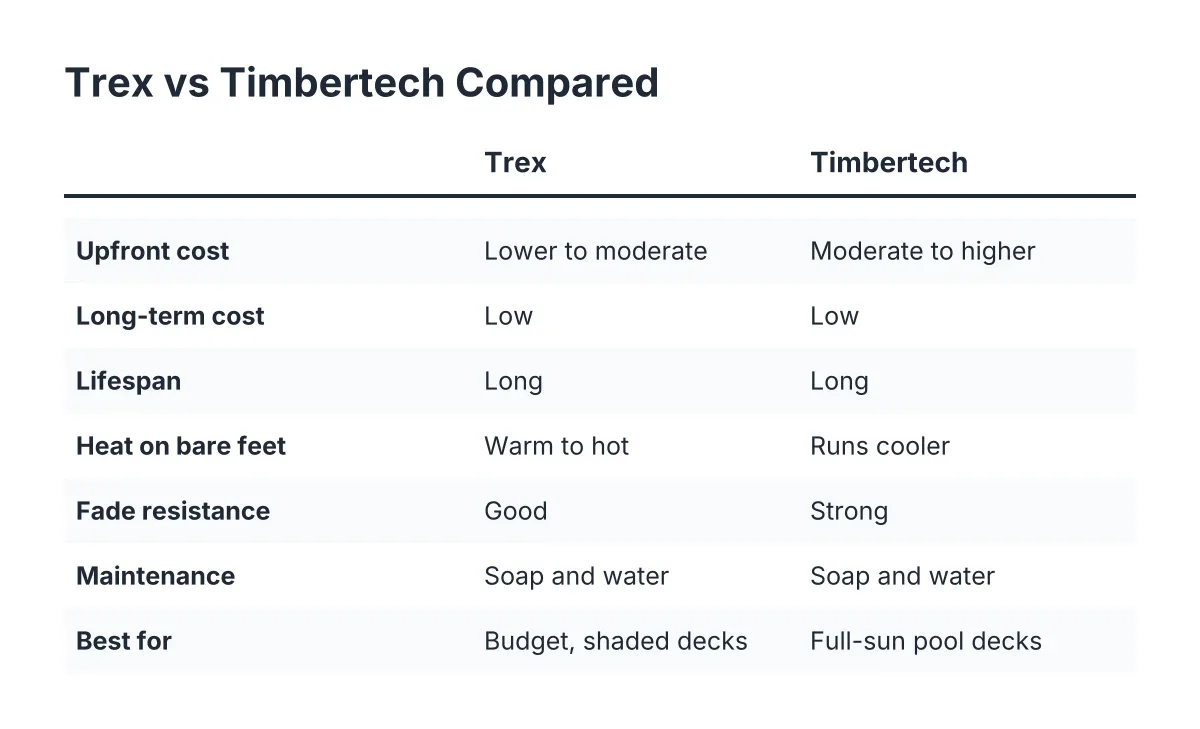
If you're building a deck in Henderson, the trex vs timbertech question comes up in almost every design meeting we have. Both are composite decking brands, and both handle the desert far better than wood. The short answer: Trex wins when you want a proven mid-range composite with wide availability and solid value, while Timbertech wins when surface heat and long-term fade matter most and you're willing to pay more for its capped PVC lines. Neither choice is wrong, but in a backyard that bakes all summer, the details decide it. Here is how the two stack up for a Mojave backyard.
| Criteria | Trex | Timbertech |
|---|---|---|
| Upfront cost | Lower to moderate, depending on the line | Moderate to higher, especially for capped PVC lines |
| Long-term cost | Low; occasional cleaning, no staining | Low; occasional cleaning, no staining |
| Lifespan | Long; capped composite resists rot and insects | Long; PVC lines shrug off moisture and heavy sun exposure |
| Heat on bare feet | Warm to hot in full desert sun, lighter colors help | PVC lines tend to run cooler; still warm in direct sun |
| Fade resistance | Good on capped lines | Strong, particularly on premium capped and PVC boards |
| Maintenance | Soap-and-water cleaning | Soap-and-water cleaning |
| Best for | Budget-conscious builds, shaded or covered decks | Full-sun pool decks, dark colors, buyers planning to stay long term |
Trex: Strengths and Trade-offs
Trex is a capped composite. That means a core made of recycled wood fibers and plastic, wrapped in a protective plastic shell. The shell is what keeps it from staining, splintering, or needing a coat of sealer every spring. For a Henderson homeowner tired of watching wood decks crack and gray in two summers, that alone is the reason composite exists.
Trex's biggest strength is range. It comes in several product lines at different price points, so you can match the board to the budget. The entry lines make composite decking reachable for homeowners who assumed it was out of range. The mid and upper lines add richer color streaking and a tougher cap. Availability is another practical advantage; most suppliers in the Las Vegas Valley stock Trex, which matters when a project is on a schedule.
The trade-off is heat. Like most wood-plastic composites, Trex boards absorb sun and hold it. On a west-facing Henderson patio with no shade, a dark composite board gets uncomfortable for bare feet on summer afternoons. Lighter colors and a patio cover help a lot, and we design around that. The entry-level lines also show a more repetitive grain pattern, and their thinner cap is less forgiving of scratches from dragged furniture. If you go Trex in full sun, plan the color and the shade together.
Timbertech: Strengths and Trade-offs
Timbertech sells two families of boards: capped composite, similar in construction to Trex, and capped polymer, which is PVC through and through with no wood fiber in the core. The PVC lines are the reason Timbertech comes up so often in desert builds. No wood fiber means the board absorbs less heat and holds less moisture, and the caps on the premium lines carry strong fade resistance. Around pools and hot tubs, where boards get splashed daily and baked hourly, that construction earns its price.
Timbertech's caps also tend to have more varied, realistic graining, especially in the upper lines. If you want a deck that reads as wood from ten feet away, the premium boards do that well. For homeowners in master-planned communities where the HOA design review looks at color and finish, having a wide palette of natural tones makes approval submissions easier to put together.
The trade-off is mostly cost. The PVC lines sit at the top of the composite market, and the difference on a large multi-level deck adds up fast. PVC also expands and contracts with temperature swings more than some composites, which is a real factor here where a January morning and a July afternoon are different worlds. That is an installation detail, not a flaw; it just means the gapping and fastening have to be done right. A builder who works with these boards regularly knows the spacing the desert demands.
Trex vs Timbertech: The Deciding Factors
Cost drivers
Trex usually costs less upfront for a comparable look, and Timbertech's premium PVC lines cost the most of either brand. But the board is only one piece of the number. Framing, footings, railing, and site conditions drive the total as much as the decking does. In Henderson, caliche, the cement-hard soil layer common across the valley, can turn simple footing digs into slow work, and that shows up in the labor line no matter which board you pick. Good deck cost estimating separates the board price from everything underneath it; our guide to getting an accurate deck quote in Henderson walks through what a complete bid should itemize.
Heat and sun
Timbertech's PVC lines have the edge in full desert sun, and that edge is the main reason to pay for them. Composite boards with wood fiber hold more heat than PVC boards, and every brand's dark colors run hotter than light ones. If your deck faces west with no shade, board choice and color choice matter more than brand loyalty. A covered patio or awning changes the math entirely; under shade, a mid-range Trex board is comfortable and the premium upcharge buys you less.
Lifespan and fade
Both brands last a long time in most homes, and both resist the rot and insect damage that kill wood decks. The difference shows in fade. UV exposure here is relentless, and cheaper caps on any brand's entry lines will mellow in color faster than premium caps. Timbertech's upper lines and PVC boards hold color notably well; Trex's upper lines are also solid. If you're choosing an entry-level board from either brand for a full-sun deck, expect some color shift over the years and pick a tone you'll still like after it softens.
Installation
Neither brand is harder to install than the other, but both punish sloppy work in this climate. Composite and PVC boards move with temperature, so end gaps, fastener choice, and joist spacing have to account for our swings between winter nights and summer afternoons. Under it all, footings have to reach stable bearing in desert soil, and permits run through Clark County or the City of Henderson depending on your address. The brand on the box matters less than the builder setting the gaps.
Situational fit
Match the board to the exposure, not the marketing. A shaded, covered patio deck is forgiving; a bare pool deck in full sun is not. Trex fits the first situation at a better price. Timbertech's PVC lines fit the second, especially if you want darker colors or you're building a hot tub deck where water and sun hit the boards together. For a deck addition you plan to enjoy for decades, the premium board's fade and heat performance is worth a real look.
Which Should You Choose?
Choose Trex if:
- Your deck will sit under a patio cover, awning, or reliable afternoon shade
- Budget is the deciding factor and you want composite instead of wood without stretching
- You prefer lighter board colors, which stay cooler and hide fade better
- You want wide local availability and lots of price tiers to choose from
Choose Timbertech if:
- Your deck gets full sun most of the day, especially west or south exposure
- You're building around a pool or hot tub where boards get wet and baked daily
- You want a dark color and need the coolest, most fade-resistant version of it
- You plan to stay in the home long term and want the premium cap working for you the whole time
If you're stuck between them, let the sun decide. Shade favors Trex's value; full Mojave exposure favors Timbertech's PVC construction. Bring both sample boards outside in July, leave them on the patio for an hour, and touch them. That test settles more debates than any brochure.
Common Questions
Is Timbertech worth the extra cost over Trex?
For a full-sun Henderson deck, often yes, because the PVC lines run cooler and hold color better under heavy UV. For a covered or shaded deck, the gap in performance narrows and Trex's price advantage usually wins. Pay for the premium board where the sun will actually test it.
Does composite decking get too hot to walk on in the desert?
Any decking gets hot in direct summer sun here, including wood. Lighter colors, PVC construction, and shade from a patio cover all bring surface temperatures down to livable. Most of our designs treat shade as part of the deck, not an afterthought, because in this valley the two only work together.
Which brand is better for resale value?
Neither brand carries a resale premium over the other in most markets; buyers respond to a clean, well-built composite deck, not the logo on the boards. When weighing trex vs timbertech for resale, put the money into the design, the railing, and the shade structure instead of the brand tier. A well-designed outdoor living space sells the backyard either way.
Can I mix brands, like Trex decking with different railing?
Yes, and it's common. Decking and deck railing are separate decisions, and many builds pair one brand's boards with another's railing or with aluminum or cable rail. The connection details have to be done correctly, but there's no rule locking you into one catalog.
If you need deck construction, Henderson Deck Co can help.
Prefer to talk it through? Call (725) 425-5179 — a quick call is usually the fastest way to get a straight answer for your situation.