Deck Cost Estimating Terms Explained: A Plain-English Glossary
If you are collecting deck quotes in Henderson, you will run into words that builders use every day but never explain. This deck cost estimating glossary breaks down the terms that show up in bids, permit paperwork, and material brochures so you can read a quote line by line. Each entry starts with a plain definition, then tells you why the term matters to your budget. Use it to ask sharper questions and spot gaps before you sign anything.
- Scope of Work: what the builder will actually do
- Line-Item Estimate: costs broken out piece by piece
- Allowance: a placeholder budget for an unchosen item
- Change Order: a written mid-project price change
- Contingency: a cushion for surprises
- Square-Foot Pricing: a rough cost per unit of deck size
- Composite Decking: wood-plastic boards that skip staining
- PVC Decking: all-plastic boards for harsh sun
- Substructure (Framing): the skeleton under the deck boards
- Footing: the concrete base that carries the load
- Caliche: the hard desert layer that fights excavation
- Ledger Board: where the deck attaches to your house
- Permit: the city or county's official approval to build
- HOA Design Review: your community's sign-off on the look
- Site Prep: getting the ground ready before building
- Load Rating: how much weight the deck can safely hold
- Railing System: the guardrails and how they are priced
- Punch List: the final fix-it list before the job is done
Pricing and the Quote Itself
These are the terms you will meet first, because they live inside every deck cost estimating conversation and every written bid.
Scope of Work in Deck Cost Estimating
A scope of work is the written list of everything a builder agrees to do on your project. It should name the deck size, materials, railing, footings, and any extras like a patio cover or hot tub support. If something is not in the scope, assume it is not in the price. The most common billing dispute starts with a homeowner who thought a task was included and a builder who never wrote it down.
Line-Item Estimate
A line-item estimate is a quote that breaks the total price into separate parts, such as demolition, footings, framing, decking, and railing. It lets you compare two bids piece by piece instead of staring at two mystery totals. A builder who gives you line items is showing you where the money goes. One who refuses may be hiding padding, or may just not know their own numbers. Our guide to getting an accurate deck quote in Henderson walks through what each line should cover.
Allowance
An allowance is a placeholder dollar amount in a quote for something you have not picked yet, like railing style or lighting. If your final choice costs more than the allowance, you pay the difference. Low allowances make a bid look cheap on paper. Ask what the allowance would actually buy before you compare totals.
Change Order
A change order is a written agreement that changes the original contract's scope, price, or schedule after work has started. Moving a stair, upgrading boards, or hitting a buried surprise all trigger one. Change orders are normal; verbal changes are not. Insist that every change gets written down and priced before the work happens.
Contingency
A contingency is money set aside, usually by you, for problems nobody can see before digging starts. In the Las Vegas Valley that often means hard soil, old buried concrete, or utility lines in awkward spots. A builder who suggests you hold a contingency is being honest about how desert ground behaves. No contingency in your budget means any surprise comes straight out of your finish choices.
Square-Foot Pricing
Square-foot pricing is a rough cost figure a builder quotes per unit of deck area to ballpark a project. It is useful for early planning and almost useless for a final budget. Height, railing length, footing count, and material grade all move the real number without changing the square footage. Treat it as a starting point for deck cost estimating, not a promise.
Materials and Structure
Composite Decking
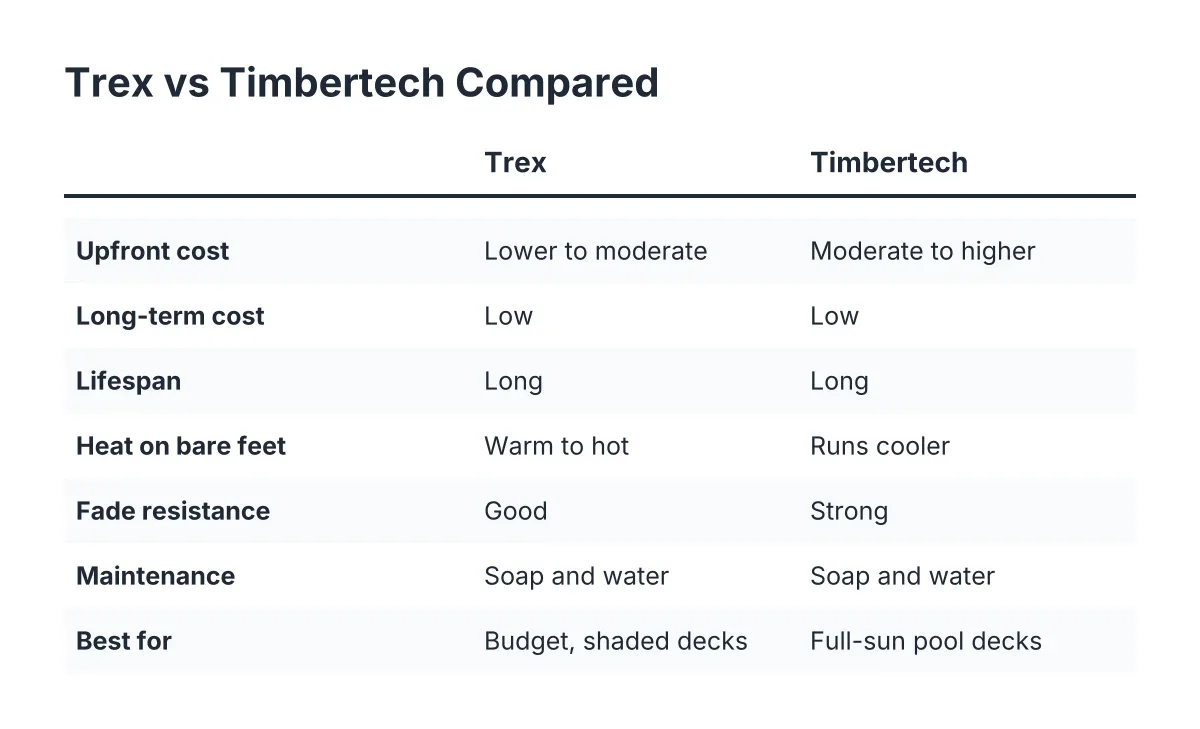
Composite decking is board made from a blend of wood fibers and plastic that resists fading, splintering, and rot without staining. For Henderson backyards it matters because composite handles sun exposure far better than bare wood, though darker colors still get hot underfoot in summer. Heat-reflective lines exist for exactly this reason. If you are weighing brands, see our comparison of Trex and TimberTech.
PVC Decking
PVC decking is board made entirely of plastic, with no wood content at all. It shrugs off moisture and insects and tends to hold color well under hard desert sun. It usually sits above composite in price, so a quote that specifies PVC should also show that cost difference in the decking line. Ask the builder why they chose it for your yard; the answer tells you how they think about heat and fade.
Substructure (Framing)
The substructure is the frame of joists and beams that holds up the deck boards you walk on. It is the part you never see and the part most likely to decide how long the deck lasts. Some builders pair premium boards with bargain framing, which is like fine paint on a rotting fence. When comparing quotes, ask what the framing material is and how it is protected.
Footing
A footing is the concrete base poured into the ground that carries the deck's weight down to solid soil. The number, depth, and size of footings drive a surprising share of labor cost, especially when the digging is hard. A tall deck, a multi-level deck, or a hot tub deck all need more or bigger footings. Vague footing language in a quote is a red flag worth questioning.
Caliche
Caliche is a cement-like layer of hardened soil common in desert ground around the Las Vegas Valley. Hitting it can turn a one-hour post hole into an afternoon with heavy equipment. Local builders expect it; out-of-area crews often do not. If a quote mentions caliche or hard-dig conditions, the builder is pricing in reality instead of hoping for soft dirt.
Ledger Board
A ledger board is the horizontal board that attaches a deck to the side of your house. It transfers part of the deck's weight to the home's structure, so it has to be flashed and fastened correctly to keep water out and the connection strong. Ledger failures cause many deck collapses, which is why inspectors look at them closely. A freestanding deck skips the ledger but needs extra footings instead, and the quote should reflect that trade.
Permits, Approvals, and Process
Paperwork terms confuse buyers more than construction terms do, so this part of the deck cost estimating glossary covers what the approvals in your quote actually mean.
Permit Requirements in Deck Estimating and Costing
A permit is official permission from your city or county to build the deck, issued after plans are reviewed. In the Henderson area, the permit path depends on where you live and what you are building, so a builder should tell you which office applies to your address. Permit fees and plan drawings sometimes appear as their own line in a quote. A builder who offers to skip permits is transferring risk to you, since unpermitted work can complicate inspections and resale.
HOA Design Review
An HOA design review is the approval process your homeowners association uses to sign off on the look and placement of your deck or patio cover. Master-planned communities around Henderson often require it before any permit work starts. The review can affect material colors, height, and visibility from neighboring lots. Ask whether the builder prepares the submittal package or leaves that paperwork to you, because that difference changes both your timeline and your workload.
Site Prep
Site prep is all the work needed to get your yard ready before construction, such as removing an old patio, grading soil, or relocating irrigation lines. It is a common source of surprise charges because it is easy to underestimate from a photo. A builder who walks your yard before quoting will price site prep more accurately than one who bids from the street. Confirm what demolition and haul-away are included.
Load Rating
A load rating is the amount of weight a deck is designed to safely carry, counting people, furniture, and anything heavy like a spa. It matters most for hot tub decks, where a filled tub concentrates serious weight in one spot. Supporting that load means extra framing and footings, which should show up as their own costs. If you ever plan to add a hot tub, say so before the design is final; retrofitting support costs more than building it in.
Railing System
A railing system is the set of posts, rails, and infill (like balusters or cable) that forms the guardrail around a deck. Railing is priced by length and style, and it can swing a quote more than most homeowners expect. Building rules generally require railing once a deck sits above a certain height, so your builder should flag whether yours needs it. Upgrading from standard pickets to glass or metal infill is one of the biggest optional cost jumps on a deck project.
Punch List
A punch list is the final checklist of small fixes and touch-ups a builder completes before the job is officially done. Think loose fasteners, a sticky gate, or a scuffed board. A good contract ties the last payment to punch-list completion, which keeps everyone motivated to finish well. Walk the deck with the builder and write the list together rather than reporting problems one at a time.
Using These Terms
With this deck cost estimating glossary in hand, you can read a bid the way a builder does: scope first, then structure, then the paperwork lines that protect you. When a quote skips footings, allowances, or permits, you now know to ask why. Clear questions get clear answers, and clear answers make for a deck project with no surprises.
If you need deck construction, Henderson Deck Co can help.
Prefer to talk it through? Call (725) 425-5179 — a quick call is usually the fastest way to get a straight answer for your situation.